Saturday, July 19, 2025

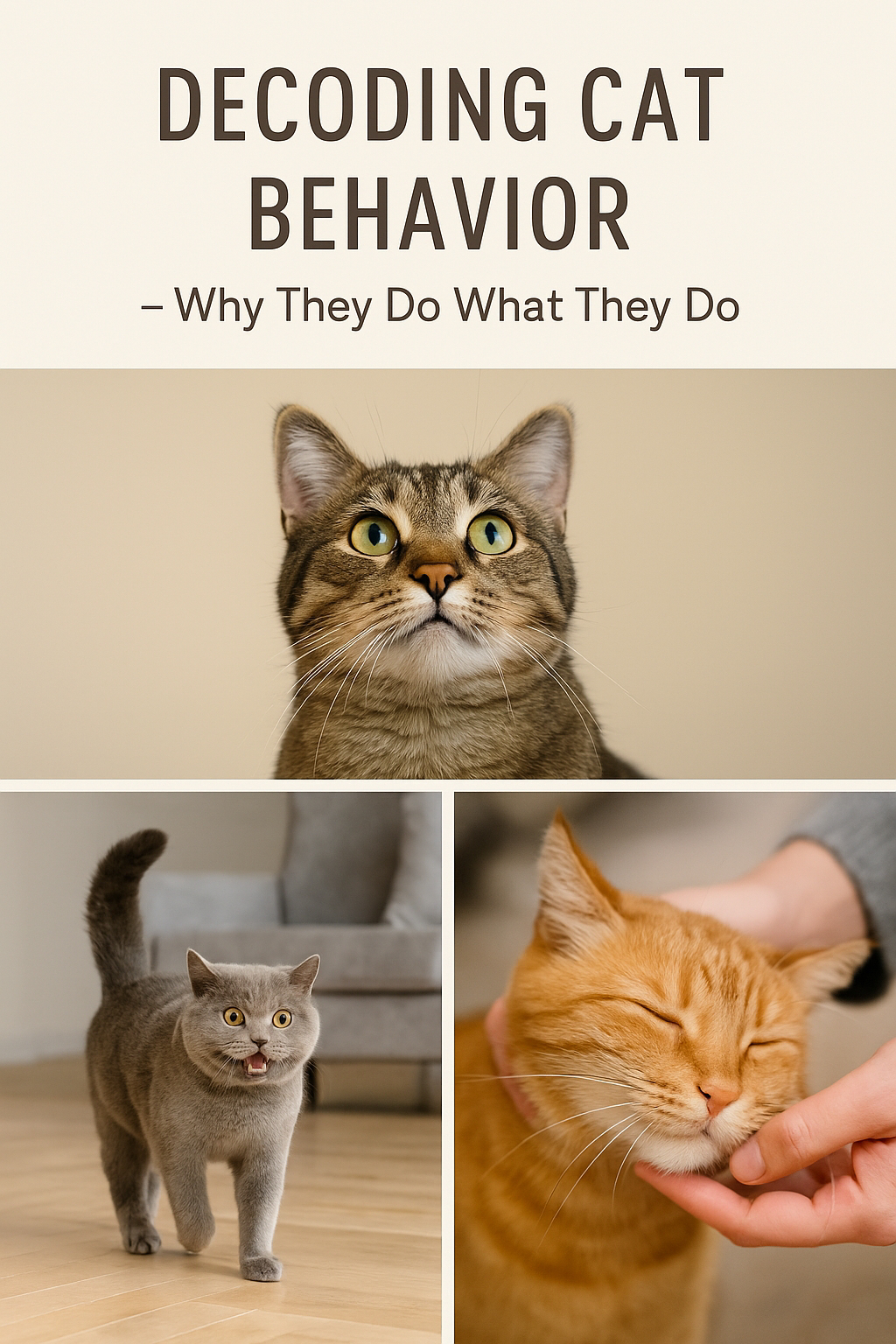
Decoding Cat Behavior – Why They Do What They Do

Cats are mysterious, graceful, and endlessly fascinating—but sometimes their behavior leaves us scratching our heads. Why do they knead your lap like dough? Why do they suddenly sprint through the house at 2 a.m.? Understanding your cat’s behavior helps you build a better bond—and gives your feline the respect and care they deserve.

1. The Zoomies (AKA Midnight Madness)

Sudden bursts of energy, especially late at night, are totally normal. Cats are crepuscular, meaning they’re most active at dawn and dusk. Add in a nap-heavy schedule and a little pent-up energy, and boom—zoomies. Play sessions before bed can help burn off steam.

2. Kneading With Their Paws

When your cat kneads you like bread dough, they’re showing comfort and affection. Kittens knead their mothers to stimulate milk flow, and many cats carry that soothing habit into adulthood. It’s their way of saying, “I trust you.”

3. Tail Language

A high, upright tail = happy cat. A puffed-up tail? Fear or aggression. And a gently swishing tail doesn’t mean contentment—it often signals focus or irritation. Learn the cues, and you’ll know how your cat is feeling at a glance.

4. Head-Butting and Face Rubbing

This isn’t just cute—it’s how cats mark you as “theirs.” Scent glands on their face allow them to claim territory and loved ones. If your cat head-butts you or rubs on your legs, take it as a feline compliment.

5. Staring (and Slow Blinks)

Cats communicate a lot with their eyes. A hard stare may be a challenge or intense curiosity. A slow blink, however, is the ultimate sign of trust. Try slowly blinking back—you just might make your cat purr.

6. Hiding or Solitude

If your cat disappears into a box or closet, don’t panic. Cats often seek out quiet, enclosed spaces to rest or feel safe. It’s not a snub—it’s instinct. Just make sure they’re not hiding due to stress or illness.


Cats may seem aloof, but they’re constantly communicating—with their tails, ears, whiskers, and behavior. Learning to “speak cat” helps deepen your relationship and turn confusion into connection. And the more you understand them, the more they’ll trust you in return.

Thursday, July 10, 2025

Do Cats Get Bored? How to Keep Indoor Cats Stimulated

Cats have a reputation for being low-maintenance, independent, and perfectly content to nap the day away. But here's a question every cat owner should ask: Do cats get bored?

The answer is a resounding yes—especially indoor cats. While they might not need a walk like a dog or demand constant attention like a toddler, cats absolutely need mental and physical stimulation to stay healthy and happy. Without it, they can develop behavioral problems, gain weight, or even become depressed.

So let’s talk about why cats get bored, how to spot the signs, and—most importantly—how to keep your indoor feline friend entertained, enriched, and thriving.


๐Ÿง  Yes, Cats Can Get Bored (And It’s More Common Than You Think)

In the wild, cats spend a huge portion of their day hunting, stalking, climbing, and defending territory. They’re natural problem-solvers and athletes—even the laziest-looking house cat has ancient instincts just below the surface.

But indoor cats don’t have to work for their food. Their territory rarely changes. They don’t hunt or chase or solve puzzles unless we give them those opportunities. And when those natural needs aren’t met? Boredom sets in.


๐Ÿšฉ Signs Your Cat Might Be Bored

Not sure if your cat is bored or just mellow? Watch for these common signs of feline boredom:

  • Destructive behavior (scratching furniture, knocking items off shelves)
  • Overeating or begging for food constantly
  • Sleeping excessively (more than their usual 16–20 hours)
  • Meowing excessively or acting out to get your attention
  • Aggression toward other pets or people
  • Obsessive grooming or overgrooming
  • Pouncing or attacking you during play-starved moments

Some of these signs can also indicate health issues, so if you're unsure, always check with your vet. But in many cases, it’s just a bored kitty who needs more stimulation.


๐Ÿงฉ Enrichment Ideas – How to Stimulate Your Indoor Cat

Here’s the good news: keeping your cat entertained doesn’t have to be complicated or expensive. In fact, some of the best enrichment options are simple and DIY-friendly.

๐Ÿญ 1. Rotate Toys Regularly

Cats get bored with toys that never change. Keep a stash and rotate them weekly to keep things fresh. Add in a mix of:

  • Wand toys
  • Stuffed mice
  • Crinkly balls
  • Puzzle toys
  • Feather teasers

๐ŸŽฎ 2. Try Puzzle Feeders and Food Games

Give your cat’s brain a workout by making them “hunt” for their food. You can buy puzzle feeders or make your own by hiding kibble in toilet paper rolls or egg cartons.

Bonus: this also slows down fast eaters!

๐Ÿ“บ 3. Cat TV – Yes, It’s a Thing

YouTube is full of bird videos made just for cats. You can also set up a bird feeder outside a window to give your indoor cat a safe way to “hunt” with their eyes.

Window perches make it even better.

๐Ÿ—️ 4. Climbing Structures and Vertical Space

Cats love to be up high. Provide cat trees, shelves, or tall furniture they can safely climb. It gives them a better vantage point and satisfies their instinct to patrol.

No need to break the bank—stacked bookshelves or DIY wall shelves work great.

๐Ÿšช 5. Controlled Outdoor Time

If your cat is open to it, try harness training for short, supervised outdoor adventures. You can also set up a "catio" (cat patio) or window box for fresh air and safe exploration.

Even 10 minutes outside can make a big difference.

๐Ÿงธ 6. Interactive Play With You

You are your cat’s favorite toy. Schedule playtime with wand toys, laser pointers, or hide-and-seek games. Even 15 minutes a day can burn energy and strengthen your bond.

Remember: never let your cat catch the laser pointer—end the game with a real toy or treat to avoid frustration.

๐ŸŒฟ 7. Sensory Enrichment

Try safe plants like cat grass or catnip. Some cats also love the scent of silvervine or valerian root. These options engage their senses and spice up the environment.

Don’t overdo it—use as a treat, not daily.

๐Ÿงถ 8. Cardboard Boxes, Tunnels, and Paper Bags

Sometimes, the best toy is a cardboard box. Add some paper, cut holes for peeking, or create a little cat fort. Bonus points if it turns into a full obstacle course.

Just remove any handles or strings that could be a hazard.


๐Ÿง“ What About Senior Cats?

Older cats can get bored too, but they may not show it as energetically. Gentle play, easy-to-navigate cat furniture, and calming enrichment like scent-based toys can help. Don’t assume that because they’re napping a lot, they don’t want stimulation—it just might need to be lower-impact.


๐Ÿง  Mental Stimulation Is Just as Important as Physical

We often think about cats needing physical activity, but mental enrichment matters just as much. If your cat seems under-stimulated but isn’t playful, try:

  • Teaching simple tricks (yes, it’s possible!)
  • Naming toys and encouraging them to “find” specific ones
  • Playing memory games with hidden treats
  • Switching up routines with small surprises

A cat with a busy brain is a happy cat.


๐Ÿพ Final Thoughts – A Bored Cat Is a Misunderstood Cat

If your indoor cat seems a little “off” lately, boredom might be the culprit. The good news is that you don’t need fancy gear or endless free time to keep your kitty engaged. A little creativity, a few minutes of daily interaction, and rotating enrichment can go a long way.

Cats are clever, curious, and full of personality—and when we give them the stimulation they need, they reward us with calmer behavior, better health, and a stronger bond.

So go ahead: grab the feather wand, open the blinds, and let your cat be a cat.
Thursday, July 3, 2025

Should You Declaw Your Cat? (Spoiler: No.)


Declawing a cat might sound like a simple solution to scratched furniture or unwanted behavior, but in reality, it’s anything but simple—or humane. Despite its misleading name, declawing isn’t just a “nail trim.” It’s a surgical procedure that amputates the last bone of each toe. Imagine losing the tips of all your fingers at the last knuckle—and then being expected to walk, stretch, and defend yourself like normal.

If that sounds extreme, that’s because it is. And thankfully, many regions (including where we live!) have recognized this for what it is: animal cruelty. Let’s break down what declawing really is, what it does to your cat, and what humane alternatives exist.


๐Ÿ™€ What Declawing Actually Involves

Declawing, also known as onychectomy, is the amputation of the last bone of each toe. It’s not just the removal of the claw—it's cutting through bone, nerves, and tendons. This is typically done with a scalpel, laser, or even a guillotine-style clipper (yes, really). Post-surgery, cats must bear their full weight on mutilated paws.

It’s often done as a convenience surgery, not for medical reasons—which makes it even more alarming.


๐Ÿ˜ฟ Long-Term Effects of Declawing

The aftermath isn’t just about short-term pain. Cats suffer long-term physical and psychological consequences, including:

  • Chronic pain in the paws and joints
  • Arthritis and abnormal gait from altered walking patterns
  • Litter box avoidance, due to pain when scratching
  • Increased aggression or biting, since they’ve lost their primary defense
  • Depression and anxiety, from loss of control and chronic stress

Declawed cats are often surrendered to shelters when these behavioral issues arise—ironically, because the very problems owners were trying to prevent end up getting worse.


๐Ÿพ Why Scratching Is Normal and Necessary

Cats need to scratch—it’s how they stretch, shed old nail layers, and mark territory with scent glands in their paws. Denying them this natural behavior causes frustration and health problems.

Instead of punishing them for being cats, let’s set them up for success.


๐Ÿงถ Humane Alternatives to Declawing

There are many ways to manage scratching that don’t involve surgery or suffering:

  • Scratching posts and pads in key locations (especially by windows and furniture)
  • Nail trims every 2–3 weeks to keep claws blunt
  • Soft nail caps (like Soft Paws) as a temporary barrier
  • Double-sided tape on furniture corners
  • Feliway spray to reduce territorial stress
  • Positive reinforcement to encourage proper scratching spots

With a little effort and understanding, you can redirect scratching in a way that works for everyone.


๐Ÿฑ Legal Progress and Why It Matters

Declawing is now banned or heavily restricted in many places, including several U.S. cities, entire provinces in Canada, and countries across Europe. These legal changes reflect what science and ethics have shown us: declawing is unnecessary, inhumane, and outdated.

If you're lucky enough to live somewhere that bans it, be proud—you're part of a growing movement for better feline welfare.


๐Ÿ’ฌ Final Thoughts

If you love your cat, respect their body and instincts. Declawing doesn’t just remove claws—it removes trust, comfort, and quality of life.

Our role as caretakers is to work with our cats, not against them. With the right tools and mindset, you can protect both your furniture and your feline—no surgery required.


Have you dealt with scratching issues? What worked for you? Share your tips in the comments—we’re always learning from each other in this community. ๐Ÿพ

Thursday, June 26, 2025

Litter Box Woes – Solving Common Problems and Preventing Accidents


Even the most devoted cat lover can admit—litter box issues are one of the less glamorous parts of feline companionship. But when your cat suddenly stops using the litter box, it’s more than an inconvenience—it’s a sign that something is off. Whether you're dealing with occasional accidents, persistent problems, or just trying to prevent them altogether, understanding litter box behavior is key to a cleaner, happier home.

In this post, we’re tackling the most common litter box problems, why they happen, and—most importantly—how to fix them.


Why Do Litter Box Problems Happen?

Cats are naturally clean animals, and litter box avoidance is almost always caused by an underlying issue. Here are the most common culprits:

  • Medical issues like urinary tract infections, constipation, or arthritis
  • Stress and anxiety, often due to changes in the home
  • Litter box preferences, including type, cleanliness, and location
  • Territorial behavior, especially in multi-cat households
  • Improper litter training or early removal from the mother

Getting to the root of the problem is the first—and most important—step.


1. Rule Out Medical Issues First

Before changing anything else, make sure your cat isn’t sick. Sudden litter box avoidance, straining to urinate, blood in the urine, or crying while using the box are red flags. A trip to the vet can rule out urinary tract infections, bladder stones, kidney disease, or other health concerns.

Older cats may also struggle with arthritis, making it painful to climb into tall-sided boxes or walk across the house to reach one.


2. Keep It Clean—Really Clean

Cats have strong opinions about cleanliness. If the box is dirty, smelly, or full, your cat might take their business elsewhere.

Tips for a clean litter box:

  • Scoop waste at least once a day (more if you have multiple cats)
  • Fully replace litter weekly (or more often with non-clumping varieties)
  • Wash the litter box with unscented soap and water weekly
  • Avoid strong disinfectants or air fresheners that may offend your cat’s nose

If you wouldn't want to use it barefoot, your cat probably doesn't want to use it at all.


3. Consider the Box Itself

Not all litter boxes are created equal—and not every cat likes the same style.

Think about:

  • Size: The box should be at least 1.5 times the length of your cat
  • Depth: Low-sided boxes are easier for seniors or kittens; high-sided boxes help with scatter
  • Covered vs. uncovered: Some cats like privacy, others feel trapped
  • Type of litter: Clumping? Non-clumping? Scented? Unscented? Your cat has a preference
  • Automatic boxes: Some cats love them; others find them terrifying

If you’ve changed boxes or litter recently, that may be the cause of the problem.


4. Location, Location, Location

Where you place the litter box matters just as much as what it looks like.

Best practices:

  • Avoid noisy, high-traffic, or hard-to-reach areas
  • Don’t place it next to food or water bowls
  • Keep it away from appliances that might startle your cat (like washers or furnaces)
  • Provide easy access—especially for kittens, seniors, or cats with mobility issues

In multi-level homes, place one box on each floor. And always remember: if your cat has to go on a journey to find the box, they may just opt for the carpet instead.


5. One Box Per Cat—Plus One

The golden rule: one litter box per cat, plus one extra. So if you have two cats, you should have at least three boxes.

This helps prevent territorial disputes, reduces crowding, and gives each cat a sense of security. In multi-cat households, some cats may refuse to use a box that’s been used by another cat—especially if there’s tension.


6. Reduce Stress and Environmental Changes

Cats are creatures of habit, and stress can easily trigger litter box issues. Moving, new pets, renovations, or even a new piece of furniture can throw them off.

Help your cat adjust by:

  • Keeping routines predictable (feeding, play, etc.)
  • Using feline pheromone diffusers (like Feliway)
  • Providing plenty of vertical space and hiding spots
  • Offering extra playtime and enrichment

In cases of major anxiety or unresolved behavior problems, a vet or feline behaviorist can help.


7. Retraining and Positive Reinforcement

If your cat has developed a habit of going outside the box, you may need to retrain them gently.

Try this:

  • Keep them confined to a small area (like a bathroom) with food, water, and a clean litter box
  • Gradually increase their access to the rest of the house as they consistently use the box
  • Never punish accidents—clean them thoroughly with an enzymatic cleaner and move on

Reward correct use with praise, treats, or petting. Most cats respond best to positive reinforcement.


8. Cleaning Up Accidents the Right Way

Cats will often return to the scene of the crime if the smell remains. Regular cleaners don’t cut it—use enzymatic cleaners to fully break down urine and feces odors.

Avoid using ammonia-based cleaners, as ammonia smells similar to urine and can encourage repeat offenses.


When to Seek Professional Help

If you’ve ruled out medical problems, tried all the above, and your cat is still refusing to use the box, it’s time to call in the pros. A veterinary behaviorist can help uncover more complex issues and provide a plan tailored to your cat.

Don’t wait too long—early intervention gives you the best chance of success.


Final Thoughts: Your Cat Isn’t Mad at You

It’s easy to get frustrated when your cat starts peeing on the bed or pooping in the hallway. But remember: your cat isn’t acting out of spite. They’re trying to tell you something.

By staying patient, observant, and responsive, you can get to the root of the problem and restore peace (and cleanliness) to your home. And in the end, both you and your cat will be happier for it.

Thursday, June 19, 2025

The Best Toys for a Happy, Healthy Cat – From Kittens to Seniors

Cats may be known for their aloof independence, but any cat parent knows: the right toy can bring out the wild kitten in even the most laid-back feline. Playtime isn’t just fun—it’s essential for a cat’s physical and mental health. The best toys challenge your cat’s natural instincts, provide exercise, and prevent boredom, all while strengthening the bond between you and your pet.

From energetic kittens to wise old seniors, here’s your guide to the best cat toys at every stage of life.


๐Ÿพ Why Play Matters at Every Age

Cats are hunters by nature. Even the fluffiest lap cat has instincts to stalk, chase, pounce, and catch. Toys give cats a safe and satisfying outlet for that energy. Regular play helps:

  • Prevent obesity and related health issues
  • Reduce destructive or aggressive behaviors
  • Lower stress and anxiety (especially in indoor cats)
  • Improve coordination and agility
  • Stimulate the brain and stave off cognitive decline

Different toys meet different needs—so variety is key!


๐Ÿผ Best Toys for Kittens (0–12 Months)

Kittens are learning about the world through their paws, teeth, and curiosity. They're playful, fearless, and full of energy—but also fragile. Choose toys that are soft, safe, and engaging.

Top picks:

  • Wand toys with feathers or ribbons (for supervised play)
  • Ping pong balls or soft crinkle balls
  • Tunnels to run through and hide in
  • Stuffed toys with catnip or bell inserts
  • Interactive toys with movement or sound

๐Ÿงผ Avoid toys with small parts that can be chewed off and swallowed. Supervise heavily during teething stages.


๐Ÿˆ Best Toys for Adult Cats (1–7 Years)

This is a cat's peak of energy and agility. Many adult cats need structured play sessions to burn off excess energy—especially indoor cats who don’t get much natural stimulation.

Top picks:

  • Laser pointers (use responsibly—don’t frustrate your cat; end sessions with a toy they can catch)
  • Catnip mice and refillable plush toys
  • Cat puzzle feeders to combine hunting and snacking
  • Chase toys that mimic prey (mice, birds, or bugs)
  • Track ball toys that encourage solo play when you're not around

๐Ÿƒ Tip: Schedule short but intense play sessions daily to mimic a hunt-catch-kill pattern. It satisfies their instincts and helps them relax afterward.


๐Ÿง“ Best Toys for Senior Cats (8+ Years)

Older cats may slow down, but they still enjoy play—just at a gentler pace. Toys that stimulate the brain and promote light movement are ideal.

Top picks:

  • Interactive treat dispensers that encourage gentle pawing
  • Soft, crinkly toys that respond to light touch
  • Low-resistance wand toys for slower pouncing
  • Catnip-stuffed pillows for cuddling and chewing
  • Heated or vibrating toys for comfort and stimulation

⚠️ Watch for arthritis or dental issues. Avoid toys that require aggressive chewing or fast movements if your senior cat has mobility challenges.


๐Ÿง  Bonus: Toys for Mental Stimulation

All cats—regardless of age—benefit from toys that make them think. Boredom can lead to stress, overeating, or behavior problems.

Try:

  • Puzzle boxes with hidden treats
  • DIY egg carton games or cardboard mazes
  • Motion-activated toys that “come alive” when your cat walks by
  • Window perches with bird feeders outside for visual enrichment

๐ŸŽฎ Rotate toys weekly to keep things interesting. A toy that’s always available becomes part of the background.


๐Ÿงต DIY Cat Toys – Fun and Budget-Friendly

You don’t need to spend a fortune to keep your cat entertained! Some of the best toys are homemade:

  • Paper bags (handles removed) for hiding and pouncing
  • Toilet paper rolls filled with treats
  • Old socks filled with crinkly paper or catnip
  • Feather on a string tied to a stick (just be cautious with strings—supervise closely)

♻️ Bonus: upcycled toys are better for the planet, too!


๐Ÿ›‘ What to Avoid

Not all cat toys are safe. Always check for:

  • Loose parts that can be swallowed
  • Long strings or ribbons that can wrap around necks
  • Cheap materials or dyes that may be toxic
  • Toys designed for dogs (harder textures, large sizes)

And remember—cats can (and will!) turn things like hair ties or twist ties into “toys,” but these can be dangerous. Monitor your feline’s DIY play habits.


๐Ÿพ Final Thoughts

The best toy for your cat is one that engages them. Every cat is unique—some prefer quiet snuggles with a plushie, while others want to fly through the air after feathers. Try different styles and rotate your offerings to keep their interest.

And don’t forget—you are your cat’s favorite toy. Playtime is also bonding time. Just a few minutes a day can make your cat happier, healthier, and more connected to you.

Thursday, June 12, 2025

Indoor vs. Outdoor Cats – What's Best for Your Feline Friend?


Few topics in the cat world spark as much debate as the question of whether cats should live exclusively indoors or have access to the great outdoors. Some owners feel cats need the stimulation and freedom of nature, while others worry about safety, health risks, and wildlife impact. So, what’s truly best for your feline friend?

The answer isn’t one-size-fits-all—it depends on your cat’s personality, your environment, and your ability to manage the risks. In this post, we’ll explore the pros and cons of both indoor and outdoor lifestyles, examine safety considerations, and help you make the best decision for your cat’s health and happiness.


The Case for Indoor Cats

Let’s start with the more controlled option: keeping your cat indoors full-time. This is the most common choice for urban and suburban pet owners, and for good reason.

Pros of Indoor Living:

  • Safety from cars, predators, and poisons: Outdoor cats face threats from vehicles, aggressive dogs, coyotes, foxes, and even toxic plants or chemicals. Indoors, your cat is protected from those dangers.

  • Longer lifespan: Statistically, indoor cats live significantly longer—often 12 to 18 years or more—compared to outdoor cats, whose average lifespan is closer to 5 to 7 years.

  • Disease prevention: Cats allowed to roam outdoors are more likely to contract feline leukemia virus (FeLV), feline immunodeficiency virus (FIV), parasites like fleas, ticks, or worms, and contagious respiratory infections.

  • No exposure to cruel humans: Sadly, not everyone loves cats. Outdoor cats are sometimes targets for cruelty, traps, or poison.

  • Wildlife protection: Cats are natural hunters. Even well-fed pets may kill songbirds, small mammals, and reptiles. Keeping cats indoors helps protect local ecosystems.

Cons of Indoor Living:

  • Boredom and behavioral issues: Without enough stimulation, indoor cats can become bored, anxious, or overweight. They may develop destructive behaviors like scratching furniture or excessive meowing.

  • Lack of natural enrichment: Outdoor cats get a natural dose of exercise, exploration, and sensory stimulation that indoor environments can lack—unless you provide it intentionally.


The Case for Outdoor Access

Outdoor living—either full-time or part-time—can offer a more natural, stimulating experience for cats. Some owners believe it's the most fulfilling lifestyle, especially for cats that are used to freedom.

Pros of Outdoor Access:

  • Mental and physical enrichment: Climbing trees, chasing insects, and exploring terrain provide exercise and mental engagement that mimic a cat’s natural instincts.

  • Reduced behavioral problems: Many outdoor cats exhibit fewer destructive behaviors indoors because their energy is released outside.

  • Natural litter box use: Outdoor cats often choose natural areas to relieve themselves, reducing the need for litter box maintenance.

Cons of Outdoor Access:

  • Increased danger: Outdoor cats face significant risks—cars, predators, contagious diseases, harsh weather, and toxic substances.

  • Shortened lifespan: As mentioned earlier, outdoor cats typically live shorter lives due to the cumulative risks.

  • Community complaints and legal restrictions: Some municipalities have leash laws or cat curfews. Neighbors may object to cats using gardens as litter boxes or chasing birds at feeders.

  • Environmental impact: Outdoor cats are a leading cause of bird and small mammal population declines, especially in suburban and rural areas.


A Compromise: The Best of Both Worlds?

Many cat owners find a middle ground by offering supervised or controlled outdoor access. This allows cats to enjoy the outdoors without many of the dangers that come with free-roaming.

Ideas for Safe Outdoor Exploration:

  • Catio (cat patio): A screened outdoor enclosure attached to your home gives your cat fresh air, sunshine, and stimulation without the risk.

  • Leash training: Believe it or not, cats can be trained to walk on a harness and leash. It takes patience and the right gear, but it can be a rewarding compromise.

  • Supervised backyard time: In a secure, fenced area or under your watchful eye, some cats can explore safely for short periods.

  • Window perches and bird feeders: If outdoor access isn’t an option, make your windows engaging! A bird feeder outside a favorite window can become a cat’s favorite “TV channel.”


Things to Consider Before Letting Your Cat Outside

If you’re still unsure, take time to reflect on these key factors before making your decision.

1. Location and Environment

Do you live in a quiet rural area or a busy city street? Are there natural predators in your area? Do neighbors use pesticides or rodent poison?

2. Cat’s Personality

Some cats are confident, bold, and adventurous. Others are timid or easily spooked. A nervous cat may not fare well outdoors. A curious cat might be more suited to enrichment-based indoor living or supervised outings.

3. Age and Health

Kittens and senior cats are more vulnerable to outdoor dangers. Likewise, cats with chronic health issues, blindness, or mobility problems should stay indoors for their own safety.

4. Vaccination and Parasite Prevention

All outdoor cats (even part-time) should be fully vaccinated, microchipped, and protected from fleas, ticks, and heartworms. Talk to your vet before letting your cat outdoors.

5. Neuter/Spay Status

Unaltered cats allowed outside contribute to pet overpopulation, roaming, and territorial aggression. Spaying or neutering your cat is essential before any outdoor access is considered.


Indoor Cats Need Enrichment!

If you choose to keep your cat inside (or even mostly inside), enrichment is crucial. A bored cat is a frustrated cat. Here’s how to make their environment more stimulating:

  • Interactive toys – Feather wands, balls, puzzle feeders, and motorized toys keep their hunting instincts engaged.
  • Vertical space – Cat trees, wall shelves, or even cleared bookshelves give your cat places to climb, jump, and perch.
  • Window access – Let them watch birds, squirrels, and the outside world. A window seat or cat hammock can be a favorite lounging spot.
  • Scheduled playtime – You are your cat’s favorite toy. Daily play sessions help strengthen your bond and burn off energy.
  • Rotate toys – Just like toddlers, cats get bored with the same toys. Rotate them every few days to keep things exciting.

Final Thoughts: Choosing What’s Right for Your Cat

There’s no single “correct” answer to the indoor vs. outdoor debate. What matters most is being informed, intentional, and committed to your cat’s well-being. Some cats will thrive indoors with the right enrichment. Others will benefit from controlled outdoor access. And a few may need a blend of both.

At the end of the day, your cat’s safety, health, and happiness should guide your decision. Whichever lifestyle you choose, there are ways to make it enriching, secure, and fulfilling.

Thursday, June 5, 2025

Why Does My Cat Do That? Understanding Quirky Feline Behavior


Cats are mysterious, adorable, and sometimes downright bizarre. One moment they’re napping peacefully in the sun, the next they’re zooming across the house at full speed for no apparent reason. If you’ve ever wondered what’s going on in that furry little head, you’re not alone. Let’s dive into some of the most common (and strange) feline behaviors—and what they really mean.

๐ŸŒ€ The Zoomies (aka Midnight Madness)

Sudden bursts of energy are totally normal. Cats often get the zoomies when they have pent-up energy, especially indoor cats without much stimulation. It’s a good sign your cat needs more playtime—or is just feeling frisky!

๐Ÿ˜ผ The Slow Blink

A slow blink from your cat is basically a kitty kiss. It’s a sign of trust and affection. If you slow blink back, your cat might just return the favor.

๐Ÿงฆ Bringing You “Gifts”

Whether it’s a toy mouse or a very real (and unfortunate) bird, your cat is offering you a prize. In the wild, cats share food with those they care about. Gross? Yes. Sweet? Also yes.

๐Ÿ›‹ Kneading (aka Making Biscuits)

This stems from kittenhood, when nursing kittens knead to stimulate milk flow. Adult cats do it when they’re happy, comfortable, or marking their territory (with scent glands in their paws).

๐Ÿพ Chattering at the Window

When your cat sees a bird or squirrel and starts making strange clicking or chirping noises, it’s called chattering. It’s believed to be a mix of excitement and frustration—and possibly even mimicking prey sounds.


๐Ÿˆ‍⬛ Final Thoughts

Cats are weird. That’s part of what makes them wonderful. By learning to decode their strange habits, we grow closer to understanding their world—and deepen the bond we share with our feline companions.

Thursday, May 29, 2025

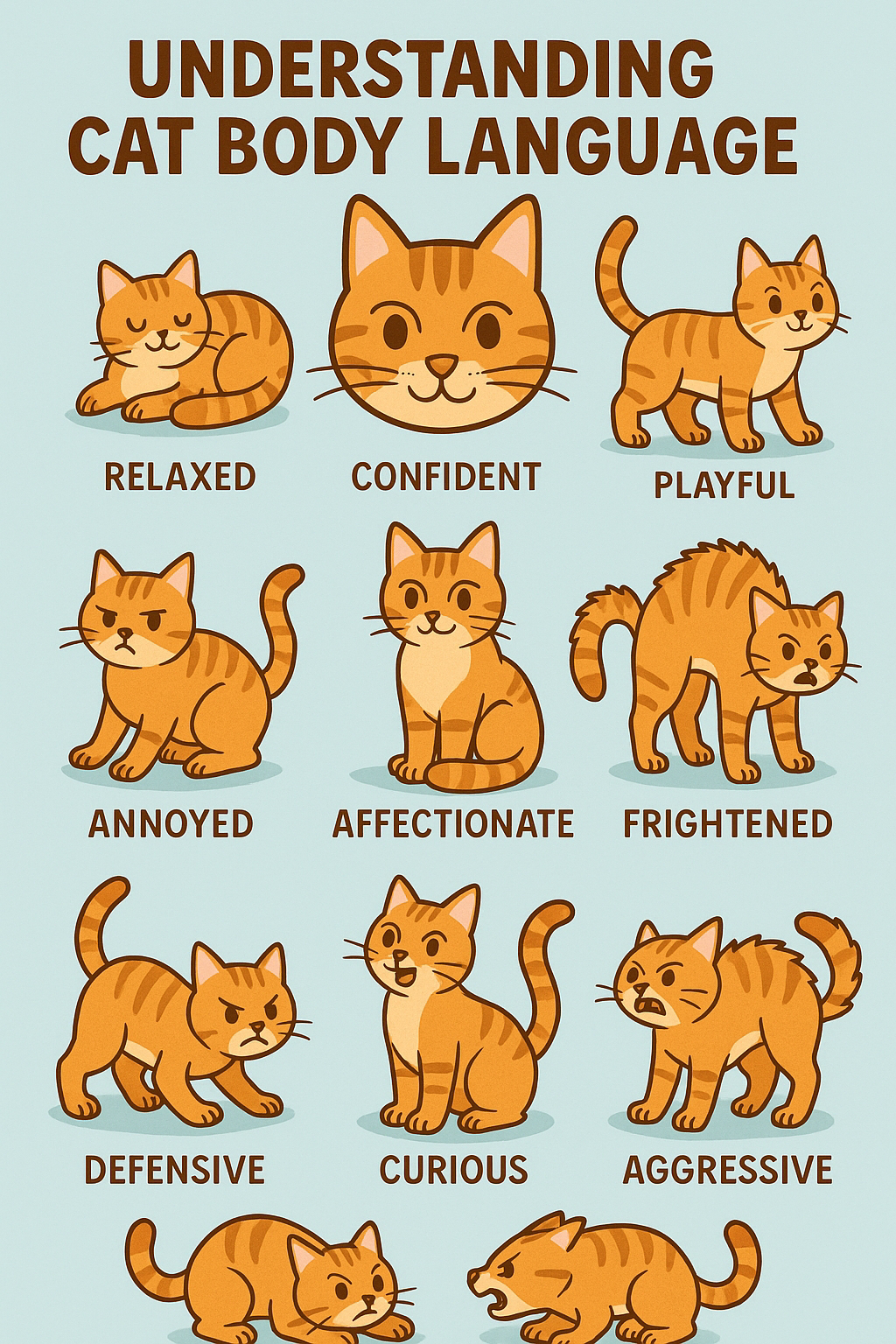
Understanding Cat Body Language: What Your Feline Is Really Saying

Cats may not speak our language, but they’re constantly communicating. From flicking tails to flattened ears, your cat’s body language offers powerful clues about how they’re feeling and what they need. Whether you’re a lifelong cat parent or a new feline friend, learning to read these signals helps deepen your bond and prevent misunderstandings.

Let’s break down the basics of cat body language—so you can finally understand what your cat is really saying.


๐Ÿ‘️ Eyes, Ears, and Whiskers

Cats have expressive faces—if you know where to look.

Eyes
• Slow blinking = Trust and affection
• Dilated pupils = Excitement, fear, or aggression
• Narrowed eyes = Relaxation or irritation

Ears
• Forward = Alert or curious
• Sideways or flattened = Anxious or annoyed
• Back and flat = Scared or defensive

Whiskers
• Forward and tense = Focused or hunting
• Relaxed = Calm
• Pinned back = Stressed or scared


๐Ÿˆ‍⬛ The Tail Tells All

Tail position is one of the clearest ways cats show emotion:

• High and upright = Confident, friendly
• Puffed up = Startled or scared
• Twitching or lashing = Annoyed or overstimulated
• Low and tucked = Nervous or submissive
• Gently swishing = Playful or curious

Pay attention to speed and motion—slow tail movements often show interest, while fast, harsh flicks mean “back off.”


๐Ÿง‍♂️ Full-Body Posture

A cat’s stance tells you how they feel in the moment:

• Relaxed, lying on their side or back = Comfortable and trusting
• Arched back with fur standing up = Frightened and defensive
• Crouching low with ears back = Scared or about to flee
• Standing tall with tail up = Happy, confident, and ready to interact

If your cat rolls onto their back, it might be an invitation to play—or a trap! Pay attention to the rest of their body and tail.


๐Ÿ˜บ Vocalizations and Body Language Together

Don’t rely on body language alone—cats often pair their posture with sounds:

• Purring with relaxed posture = Content
• Growling or hissing with tense posture = Warning signs
• Chirping or trilling = Greeting or excitement
• Meowing with upright tail and soft eyes = Wants attention

Together, vocal cues and body signals form a complete emotional picture.


๐Ÿง  Why It Matters

Understanding your cat’s body language isn’t just about avoiding scratches—it’s about trust. When your cat sees that you’re “listening,” they feel safer and more connected. You'll also be able to spot signs of stress or illness early, allowing you to act before things escalate.


๐Ÿพ Conclusion

Cats are complex, emotional creatures who speak through every flick of the tail and twitch of the ear. By tuning in to their body language, you’ll build a stronger relationship and help your feline friend feel understood, safe, and loved.

Your cat may not speak your language—but now, you speak theirs.

Monday, May 26, 2025

5 Ways Cats Show Affection (That You Might Be Missing)


Cats get a bad rap for being aloof, but if you know what to look for, you’ll find they’re constantly telling you how much they love you. Here are five subtle (and not-so-subtle) ways your cat might be saying “I adore you”:

1. Slow Blinking
That long, lazy blink? It’s a feline kiss. Try blinking slowly back—it’s a great way to build trust.

2. Head Butts and Face Rubs
Cats have scent glands on their cheeks and heads. Rubbing against you is their way of saying, “You’re part of my territory. I like you.”

3. The Tail Hug
If your cat wraps their tail around your arm, leg, or another cat—it’s a sign of affection and comfort.

4. Bringing You Gifts
Sure, a dead mouse isn’t ideal, but in cat language, it means “You’re family. Here’s some food.”

5. Sleeping Near You
Cats are most vulnerable when they sleep. Choosing to snooze on your lap or by your side is a major compliment.

Understanding your cat's love language helps deepen your bond—and makes you appreciate their quirky little heart even more.

Thursday, January 28, 2021

The Birth of Cat Fancy in the United States

Cat fancy in the United States was imported, naturally enough, from England. An Englishman named James T. Hyde organized a cat show in Madison Square Garden on May 8, 1895. It was hot and muggy and gross on that May afternoon, but over a hundred exhibitors showed up with 176 felines to compete in the show. The winner was a Main Coon, a male. 

The following year the show was smaller, with only 130 cats entered. That didn't matter to cat fanciers and they formed the American Cat Club at the conclusion of the 1896 show. This was the first registry in the United States and it took it upon itself to verify pedigrees and maintain an American studbook. They also sponsored shows and promoted the welfare of cats. Unfortunately, they disbanded a year later and there were no more shows at Madison Square Garden for several years.

Cat fancy in the United States is ever fluid, however, so it was in 1899 that the Chicago Cat Club was founded. Then the Beresford Club was established. It eventually supplanted the Chicago Cat Club, becoming the premier cat club in the United States. This wouldn't last long however, because the 20th century was dawning.

Thursday, January 21, 2021

The Birth of Cat Fancy in England

Cat fancy, at least in its most basic form, goes back further than you might think. It began in England, as so many things did. The first documented cat show in England was in 1598, the same year that Shakespeare finally published Much Ado About Nothing. The cat show was at the St. Giles Fair, but apparently it didn't attract much interest as it would be another 273 years before true cat fancy would take root in England. In 1871, a man named Harrison Weir organized a truly marvelous event. His cat show was hosted at London's Crystal Palace, and it wasn't just an event to show off your cats. Weir, being a gentleman of many talents, had spent considerable time on this event. He decided cats would be judged by judges, and he even wrote the Standards by which each of the breeds entered would be judged. Then he served as one of the three judges for the show. The show was a hit.

The breeds chosen for exhibition at shows in the 19th century were of necessity limited to those available in England at the time. There were Abyssinian and Manx, of course, but there were a couple more. The Royal Cat of Siam were permitted in both pointed and solid-chocolate colors. These cats were likely the descendants of the cats brought to England by the Romans so many centuries before. Longhaired cats were their own category, a category which included Persians, Angoras, and some of the cats from the colder climes of Russia. There were even classes for hybrid cats, if they were crossed between domestic cats and wild cats, and classes for the heaviest cats, gelded cats, and "Cats Belonging to the Working Men". This last class was quite literally for the working class of people. The entry fee was reduced, as was the prize money for the winners in that class.

This show was so popular that it led to more shows, which eventually led to the formation of the National Cat Club (NCC) in 1887. Harrison Weir was, naturally enough, the president of the NCC. The NCC, whose motto was "Beauty Lives by Kindness", served more than one purpose. It was a club, yes, but it was also a governing body. It spent a lot of time creating a national stud book and even created the first register to record the lineage of pedigreed cats. Since none of this had existed before, it took a great deal of time and effort to accomplish this. Harrison Weir published Our Cats in 1889 to showcase some of their work.

But of course, a rival would come along. The Cat Club (TCC) was founded in 1898 by Lady Marcus Beresford, among others. The TCC created its own studbook and register, so if you wanted to show your cats in both the NCC and TCC, you had to enroll them in both. This annoyed some fanciers, but it was what it was. There was considerable rivalry between the NCC and TCC for five years, but eventually The Cat Club disbanded.

Other cat clubs had popped up across England, though, which was just as annoying to cat fanciers. Eventually, all these various cubs in England agreed to amalgamate, and in March 1910 they formed the Governing Council of the Cat Fancy. This remains the oldest and largest cat association in Great Britain today. If you want to show cats in England, you register with the Governing Council of the Cat Fancy. They're where it's at, at least in Great Britain.

Monday, December 12, 2016

Hybrid Cat Breeds: Lykoi

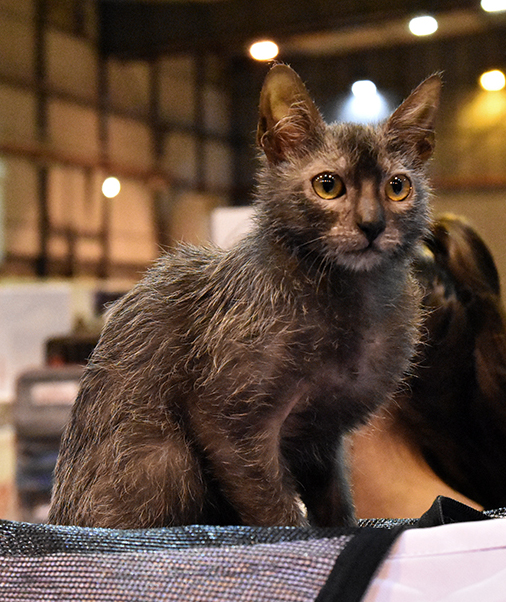
Genes are funny things, sometimes springing up for no apparent reason and with no real pattern. Back in 2011 Johnny and Brittney Gobble came across two separate litters of kittens with an unusual partially hairless pattern that was unlike anything they'd seen before. Wary of disease, the Gobbles evaluated the kittens carefully, searching for any signs of sickness or disease. Finding none, Johnny Gobble bred two of the kittens, one from each litter, to see what would happen. The result was the first intentionally bred Lykoi litter.

But there just weren't enough kittens to produce a breed that was both strong and healthy, so outcossing was inevitable. Because the mother of one of the original litters was a black domestic shorthair, black domestic cats from the area were used to expand the gene pool. Unfortunately, it turned out the gene for the unique coat was recessive, so it took some time to have enough cats with the sparse Lykoi coat for breeding programs to succeed. Even now, outcossing is common and will probably continue for some time. Though feral cats are sometimes born with the correct gene, these cats are only occasionally used in breeding programs due to their wild nature.

The Lykoi is a medium sized cat who is only partially hairless, which is not entirely unique in the cat world. The color, however, is like no other breed in existence. The hair is a combination of solid white and solid black hairs. The more white hair a cat has, the more silver he will appear, but the hairs are not actually silver or even grey. In any other animal, the color pattern would be called roan, but since only Lykoi cats have this pattern, it is simply called the Lykoi coat. Kittens are born with black fur, but by four weeks of age their permanent color pattern emerges.

The amount of hair on any give Lykoi can vary. They may be almost completely hairless or almost completely covered. They'll also occasionally molt their entire coat. Regardless of how much hair a Lykoi has, there will always be no hair around the eyes, nose, chin, muzzle, and on the backs of the ears. The skin in these areas will feel like a soft leather.

Because his hairless pattern is so sparse and patchy, the Lykoi looks like a miniature wolf. The lean body and wide ears contribute to this impression. The skin is naturally pink, but when exposed to sunlight for a few days it will darken to black. A few days out of the sun will cause the pink color to return.

These intelligent little guys are great problem solvers and tend not to need a lot of help. They like people well enough, but they don't require people to be happy. Your Lykoi will have boundless energy and will play with anything and everything. If you have two or more of these unique cats, they get along well and will entertain each other for hours on end, but a Lykoi is also perfectly happy alone. They're a little possessive, so make sure each cat has his own toys if you do decide to have more than one cat.

Naturally cautious, expect your Lykoi to take his time warming up to new people. He prefers to watch and wait until he's sure that no one presents a threat. Once he is sure, it's business as usual for this little guy. And business as usual typically means hunting for anything from a mouse to a stray paper clip. He is a predator, just like a wolf, so expect him to act like one.

If you're looking for a cat who looks and sometimes even acts like a little wolf, you might be interested in the Lykoi. Just be prepared to search long and hard for a kitten and to pay the hefty price tag for this rare cat.

Monday, December 5, 2016

Hybrid Cat Breeds: Minuet

If you cross a Persian with a Munchkin, you end up with what is known as a Minuet. This is what Joe Smith did in 1996 when he decided he wanted to create a breed that was low slung to the ground and yet had some of the more appealing features of the Persian. Because he had a particular look in mind, he used doll-faced Persians in his breeding program. They naturally had a longer nose than most Persians, lending them a more open expression Smith hoped to incorporate into his new breed. He was very much successful and applied to TICA for recognition in 2001.

But creating a new breed is a long and tedious process, so in 2008 Smith moved on to other things. That might have been the end of the Minuet as a breed, but others breeders stepped in to pick up where he left off. Many breeders can be given credit, but it was Teri Harris who presented the breed to TICA in 2011 and asked for Preliminary New Breed Status. Since then, the breed has progressed slowly and is still not recognized by most registries.

Even so, Minuets are distinct. They have the sweet face of the Persian, with a slightly longer nose, but the shorter legs of the Munchkin. The head is rounded and the eyes are large. Some Minuets have standard legs, but these are not used for breeding programs and are generally sold as pets. They do have the same face and body, however.

This medium sized cat is solid and very round. His head is round, his eyes are round, his cheeks, muzzle, and even the chest are all round. The body itself is semi-cobby, so it too has a sense of roundness. This makes them adorable and gives them an innocent expression and manner.

Gentle by nature, this cat is great with children. He is affectionate and loves his people, so he's always willing to play. He's a curious creature and he's full of energy, so expect him to 'help' you with whatever task you're currently engaged in. He likes to be in the middle of things, so he might very well decide to help you with dinner!

But he doesn't need humans to entertain him. If, for whatever reason, the people are unavailable, the Minuet can find something to do all by himself. He'll play acrobat or turn the house into a racetrack or even climb your doorways as he amuses himself. You might want to invest in a cat tree and some toys unless you want him to turn the sofa and curtains into his personal gymnasium.

If you're looking for an energetic cat with a unique look, the Minuet might be right for your household. Just keep an eye on the curtains because he can climb just about anything.

Monday, November 28, 2016

Hybrid Cat Breeds: Khaomanee

Some breeds are both ancient in origin and virtually unrecognized at the same time. Such is the case with the Khaomanee. Still a well-kept secret in its native Thailand, there are references to this majestic breed in the Tamra Maew, which is an ancient collection of Thai poems from 1350. So he's not exactly young, but he has only recently been discovered in the west.

It wasn't until 1999 that the first of these cats was imported into the United States by Colleen Freymouth. She bred the first American Khaomanee kittens even as Janet Poulson was importing a breeding pair into the United Kingdom. It took ten years, but TICA eventually accepted the Khaomanee for registration in 2009. Two years later these striking cats were advanced to Preliminary New Breed Status. Most registries, however, do not recognize the Khaomanee as a distinct breed at all.

If there is one defining characteristic of the Khaomanee, it is the eyes. The preferred eye color is actually one blue, one yellow. Sometimes the yellow eye will be more green, and sometimes a kitten is born with yellow or green eyes. Since odd-eye is preferred, kittens who are not odd-eyed are not generally included in breeding programs unless there are no other options.

The preferred coat color is white. This may, in fact, end up being the breed standard once the Khaomanee is more widely accepted. There are kittens born of other colors, however, and these kittens are as much Khaomanee as their white siblings. They're just not preferred for breeding programs.

In addition to coat color and the odd-eyes, the Khaomanee can be spotted by its heart-shaped head and high cheekbones. Ears should be large and entirely upright, giving the cat an alert appearance. All in all, the Khaomanee is a joy to behold.

Playful and a little bit naughty, the Khaomanee is devoted to his own people but sees himself as far above all who enter his domain. Humans, canines, other cats...they are all less than he is, and they all owe him a snuggle. Guests should expect a social and demanding feline companion the moment they step through the door. Once the guests have departed, however, he'll be right back in your lap, enjoying the company of his own human.

He is a curious cat and can often be found exploring cupboards, crawling thought the pantry, or scaling a bookshelf. He'll happily play fetch or climb the nearest curtain, so he has no trouble keeping in shape. You may have trouble keeping your curtains in one piece, however.

The Khaomanee is a fun loving and exciting companion. He's a wonderful addition to many households, but he's not great with dogs or other pets.

Monday, November 21, 2016

Cat Breeds: Ragamuffin

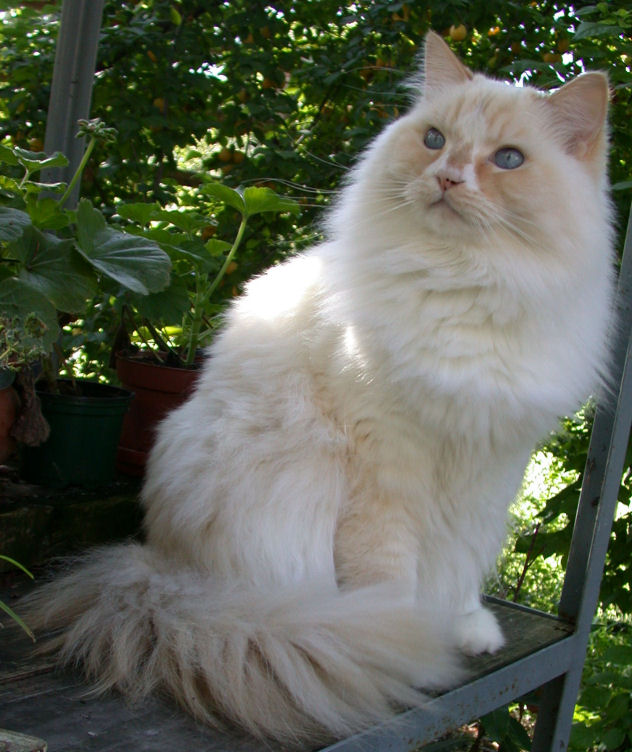
The Ragamuffin is one of those newer breeds with a somewhat hazy past. We do know that this sensitive breed was developed in 1994 from the experimental "Cherubim" cat Ann Baker tried to create in the 1960s from street cats in California. We don't really know the full story, and are not likely to discover it, but we do know that though Ann Baker is also connected to the development of the Ragdoll breed, the two breeds are not the same. There are very specific differences that warrant this cat being recognized as a separate and distinct breed.

Luckily, most registries agree. Both the Cat Fanciers' Association and the Cat Fanciers' Federation, accepted the Ragamuffin in the early 2000s, and granted them Championship Status not long after. Today, most associations acknowledge the breed, though some still contend that the Ragamuffin is merely a variant of the Ragdoll. This is, of course, nonsense.

The Appearance of the Ragamuffin

The body of a Ragamuffin is substantial and heavy. He's a large cat, weighing up to 20 pounds, and he definitely feels like it. Females tend to be significantly smaller, not usually weighing more than 13 pounds. Regardless of gender, this cat is heavily boned and well rounded. He even has a fatty pad on his abdomen, giving him more weight.

These guys take up to four years to reach maturity, so they're kittens for a long time. If you're comparing them to their cousin, the Ragdoll, you might notice that the Ragamuffin has a rounder head and a shorter nose, so he lacks the more gentle curves of the Ragdoll.

Ragamuffins come in all colors and patterns, and they may or may not have white patches. Some registries restrict which colors and patterns can be shown, but most registries that accept the breed also accept that the colors are quite a bit more varied than the colors of the Ragdoll. In essence, a Ragamuffin can look like whatever a Ragamuffin wants to look like.

Coats are a bit longer than the Ragdoll, but they're just as soft and just as low maintenance. A quick brushing once a week will do the trick. Their coats don't tend to mat and they don't shed as much as you'd expect for a cat with fully furred, medium-long hair. They're also so soft you'll find yourself unable to take your hands off the plush furball sitting on your lap.

The Personality of the Ragamuffin

The Ragamuffin is one of the sweetest of cats. He forms a strong bond with his family and pines for his people when they're not around. He doesn't like to be alone, so most people get two of these lovely beasts. Two Ragamuffins are better than one, guaranteed. Besides, this cat breed is just a little addictive. Most people find they want a second cat in short order anyway.

Calm and patient, this cat is great with children. He'll sit for hours in a baby stroller, tolerate being dressed up, and even sit through a game of checkers or a tea party. He's eager to please, making him highly trainable. He'll learn to fetch, to walk on a leash, and will usually come when called. Except when he doesn't. He is a cat, after all.

His temperament makes him a great pet for almost any household. He'll play with children, sit on the lap of an adult, and generally just offer unconditional love and support.

Like his Ragdoll cousin, the Ragamuffin tends to go quite limp when you lift him in your arms. This is temporary and normal, so don't fret. He'll be back to curling up on your lap as soon as you put him down. But for all his napping and cuddling,  he's not a lazy cat. You'll find him playing with a scrap of paper or bounding about the room at the oddest hours.

One important thing about this gentle giant is that he's far too trusting. He assumes everyone is his friend and wants to play. Because of this, he should not be left alone outside. He's far too likely to trust the wrong dog or assume the car won't run over him to be left among such dangers unsupervised.

The Ragamuffin is gentle and loving. If you're looking for a sweetheart of a cat and like having a giant furball on your lap at all hours, the Ragamuffin might be for you.

Monday, November 14, 2016

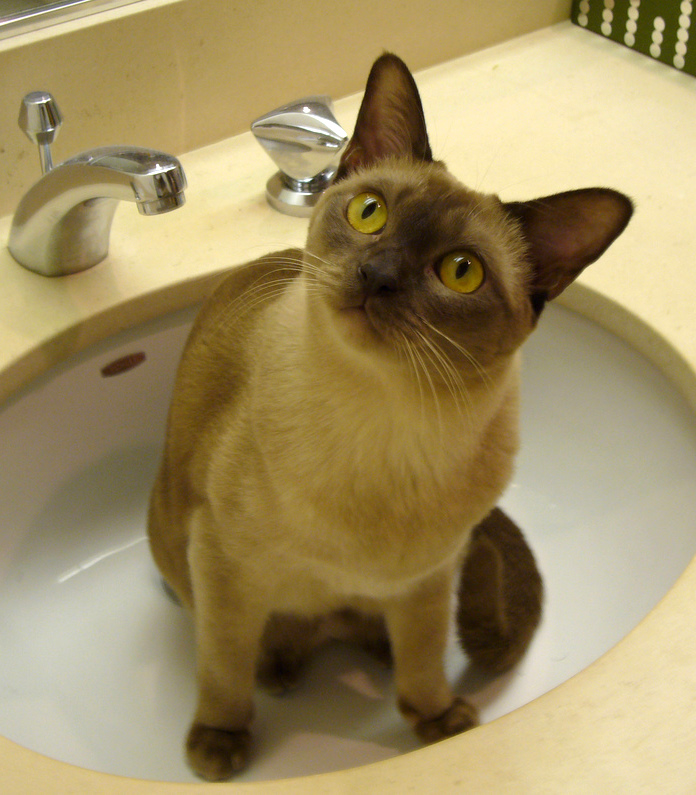
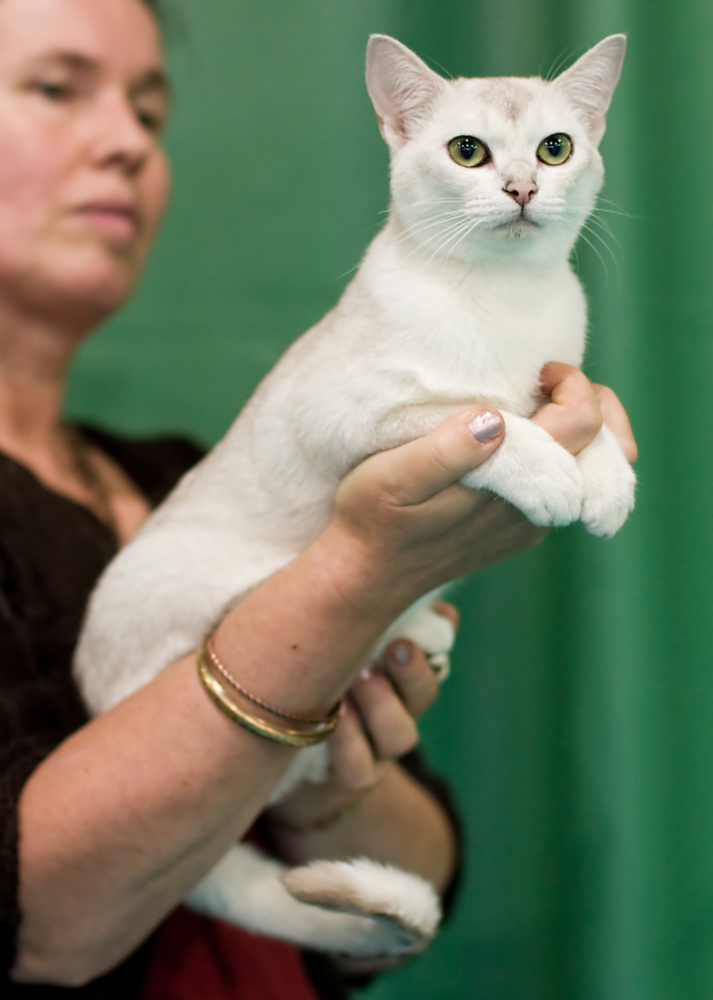
Cat Breeds: European Burmese

The European Burmese and its cousin, the Burmese, are descended from the same source. A cat named Wong Mau was the first Burmese brought to the west in the 1930s. Since she was the only one of her kind, she had to be bred to other breeds of similar type. The Siamese, being the obvious choice, was selected. Both solid and pointed kittens were produced from these breedings, with the solid kittens selected for the new Burmese breeding program.

But what about the pointed kittens? They weren't quite Siamese but they were of no use in the Burmese programs. They might have been discarded, lost to time, but a few intrepid breeders kept these kittens and labelled them European Burmese. It took time, but breeders managed to establish firm breeding programs to create and promote their new breed. Today these guys are rare, but still out there. They're just difficult to find.

The Appearance of the European Burmese

With a body that is sleek and round at the same time, the European Burmese is the perfect blend of the Siamese and the Burmese. He has short hair and is medium in size, which serves to emphasize his graceful contours and solid boning. Eyes should be large and alert and range in color from yellow to gold.

The coat should be short and soft. Unlike the Burmese, the European Burmese allow many different colors. Blue, brown, chocolate, cream, lilac, and even soft apricot reds are just some of the allowable colors. Tortoiseshell colors are also around and gaining in popularity. The pointed areas of the cat should vary, but this variation can be quite subtle or remarkably obvious. It depends on the particular cat. Marked points are preferred, but more subtle points are still allowed in competition.

The European Burmese doesn't need bathing and only rarely requires grooming. A soft rubber brush is all you really need to brush out your cat once a week.

The Personality of the European Burmese

The European Burmese is a real people cat. He loves to be with people and hates to be alone. Loyal to a fault, once you've earned his love there's nothing you can so to get rid of him. He'll follow you around, almost stalking you, until you sit down so he can curl up on your lap. When you get up again, he's going with you. He bonds strongly to a single person, but loves other as well, especially if they'll pet him.

Both intelligent and affectionate, a European Burmese will slip his way into whatever you're doing. Dishes? No problem. He'll get right in the dishwasher. Laundry? He's probably already in the dryer. And don't bother with paperwork. He's sitting on it so you'll have to play with him first. He needs your attention and knows just how to get it.

Because he loves people, all people, children are perfect companions for the European Burmese. He will play and snuggle all day if you let him. He also loves other cats and can become fast friends with the right dog, so he's suitable for most households.

If you're looking for a sweet and affectionate cat who will love you until the sky falls down, you might be looking for a European Burmese.

Monday, November 7, 2016

Cat Breeds: Burmilla

While the Burmilla is one of the newer breeds to be recognized by most associations, its origins actually go back over thirty years. And its origins were entirely an accident. A chinchillla Persian male cat was purchased by Baroness Miranda Von Kirchberg for her husband in early 1981. She was going to have him neutered, but before she could do so, he met a sweet little lilac Burmese female.

As often happens, nature took its course and on September 11, 1981 a little of four kittens were born to the Burmese female. All four kittens had short hair and were black shaded silver in color with piercing gold eyes that would later deepen to green.  These kittens were so attractive and so sweet that a breeding program was immediately established and the Burmilla was born.

The Appearance of the Burmilla

Muscular and solid, the Burmilla is a medium sized cat with a sculpted appearance from head to tail. The head should be rounded and the muzzle broad. Eyes are green, but they can start off as good or yellow when the kitten is born. A fully mature cat of at least three years should always have green eyes, but this green can take a while to appear, so don't expect your kitten to have green eyes.

The coat of all Burmillas is a sparkling silver that draws every eye. The distinctive markings on the face, which should extend directly up the nose, are often referred to as makeup. This makeup should mark the nose and line the eyes and mouth, giving the cat a sweet and open expression.

Though most people don't realize it, there are actually two coat lengths for the Burmilla. Most cats have the traditional short hair of their Burmese ancestors, but some actually have a semi-long coat. It's not as long as a Persia, but it's certainly longer than the short haired variety. Both coat lengths are acceptable in competition.

The Personality of the Burmilla

Independent and just a little irreverent, the Burmilla adores his owner but doesn't always want to show it, especially around strangers. His kitten-like attitude persists well into adulthood, but he's never annoying. Instead he is fun and gentle and always willing to nap beside you.

The temperament of the Burmilla is really quite extraordinary. He can very demanding and cuddly one moment, mischievous and playful the next. He is easy going and relaxed, like a Persian, but also social and affectionate, like the Burmese. He talks, but he's usually quiet. He is sweet natured, but tends toward inquisitive and even snoopy. A mass of contrasts describes the Burmilla best, but that's what tends to attract people to this intelligent little guy.

The Burmilla is still rare in the United States, and not exactly bountiful in Europe. If you want one, you'll have to be prepared to wait and you may have to pay a hefty price. But the exuberant and loving Burmilla is worth it, especially if you're looking for a stunning cat with a unique personality.

Monday, October 31, 2016

Cat Breeds: Turkish Van

As breeds go, the Turkish Van is one of the oldest. It's also one of the least well known, though almost every feline registry in the world acknowledges this cat as a distinct and separate breed. The ancestors of the modern Turkish Van have been roaming the mountainous areas of the Eastern Anatolian region of Turkey since at least the Middle Ages. They've probably been there much longer than that, but there is no real evidence one way or another.

Despite its ancient origins, the Turkish Van was only discovered in the 1950s. Laura Lushington and Sonia Halliday were travelling in Turkey when they spotted white cats with auburn markings covering their heads and tails. Intrigued, these ladies were able to acquire two of the kittens. The kittens travelled with the women until they returned to England. During these travels, the women noticed that the kittens, unlike other cats they had encountered, truly loved the water. They'd splash in fountains, run through puddles, and generally get into any water they could find.  Because these kittens were unique in their look and attitude, Lushington and Halliday decided to start a breeding program in England.

But the Turkish Van is rare, even in Turkey, so there weren't many cats available to export to other nations. It took a concentrated effort, one involving breeders from all over the world, to preserve and promote this breed. Breeders were rewarded for their years or dedication with recognition by TICA in 1979. Other registries soon followed once it became clear that this breed was happy and healthy and very different from other breeds out there. Even his attitude was different. This guy might be rare, but he's a joy to behold.

The Appearance of the Turkish Van

Large and powerful, the Turkish Van can weigh up to 20 pounds, though 15 is a more common weight. Regardless of size, all of these cats have a van pattern coat, which means white and colored patches, with the colored patches being restricted to the head and tail. The white should be a pure white, not at all yellowed. There is the occasional Turkish Van that is pure white, with no markings of any kind, but these are rare and usually referred to as the Van Kedi. They are also not preferred in competition, though they are just as sweet as their van patterned counterparts.  Eye color can vary, but most Turkish Vans have blue, gold, or odd-eyes.

The traditional color of the Turkish Van is a deep auburn, but most solid colors are allowed by most registries. Auburn is still the preferred color, however, so if you're looking for a show cat, you might want to look at auburn kittens. No matter what color your kitten is, this rare breed has silky fur that grows softer as he ages. Fur should be longer in the winter, long enough for the cat to have a generous tail plume, but sheds out much shorter in the summer. Grooming isn't necessarily an issue, but you should brush him out once a week and bathe him once in a while. He likes these things, so grooming and bathing is not difficult.

The Personality of the Turkish Van

Affectionate and loyal, this robust breed loves to play. He'll engage in a fun round of fetch, chase the kids as they squeal in delight, and even pester the dog into a rousing game of tag. Though he loves to cuddle, he's not overbearing at all. His great intelligence and love of people make him a great companion for just about any household.

Unlike most cats, the Turkish Van loves water. Whether it's a dripping faucet or a sprinkler in the backyard, expect your kitty to be fascinated. A happy Turkish Van is one who has room to run and splash, so consider adding a water feature to your yard so he can have some fun. Even an indoor fountain will make him happy, though he might make a mess with all his splashing. He might even swim in a pool--even if you don't want him too!

If you're looking for a fun and engaging companion who likes to hang out at the poolside, the Turkish Van might be for you.

Monday, October 24, 2016

Cat Breeds: Turkish Angora

Through Turkish Angora is one of the most recognizable cat breeds out there today, but it hasn't always been this way. The earliest reference to these majestic cats can be found as far back as 16th century France, but they probably existed before that. Mention is made of the Angora in the late 1800s and the early 1900s, but then Persian breeders folded the Angora into its own breeding programs, meaning the Turkish Angora basically disappeared as a separate breed. For a long while very few people in the world of cat fancy even knew what a Turkish Angora was.

But in Turkey, that was not the case at all. Even while the rest of the world was ignoring or dismissing the Angora, Turkey considered the breed a national treasure and even established a breeding program for these cats at the Ankara Zoo. Though all colors were welcome, this program focused on white cats with blue eyes, gold eyes, or odd eyes. Records were meticulously kept and genetics were carefully observed and recorded. This program is the only reason the Turkish Angora exists today.

The zoo didn't allow the cats to be exported, however, causing a bit of a wrinkle for the breed. But then, in the 1950s, American servicemen stationed in the area started to write home about the breed, sometimes even including pictures. Interest was aroused, and in 1962 the Ankara Zoo felt pressured into sending a breeding pair of cats to the United States with Colonel and Mrs. Walter Grant. These would be the foundation of the breed in North America, but they were hardly the last cats to be brought over from the Ankara Zoo.

Another pair was brought to the United States in 1964, and a few others here and there, until finally there were enough Turkish Angora cats in the United States for breeders to stop worrying about importing cats from overseas. Finally, after years of work and discouragement, the Turkish Angora was firmly established in North America.

The Appearance of the Turkish Angora

Often called the ballerina of cats, the Turkish Angora has long legs and a fine bone structure. Thought graceful, he is also powerful and muscular, not at all thin or bony. The head is an elegant wedge, the ears and eyes rather large, giving the breed a majestic appearance.

The coat is soft and silky and varies in length according to the season. In winter, the hair is long and the tail has a full plume. In summer, the hair is shorter, leaving only slight britches and a fluffy tail to remind you of his winter glory. Any color is acceptable, but white is the most common and the most desirable. This breed also comes in most patterns, including tabby, smoke, parti-color, and solid, obviously.

Many white cats will have odd eyes, where one eye is blue and the other is amber or green. This is allowed, but only if the cat is white. White cats may also have blue eyes, green eyes, or amber eyes. Other Turkish Angoras should have amber eyes.

With semi-long hair you might expect the Turkish Angora to mat and tangle easily, but the silky texture and uniform growth limit the grooming needs of this cat. He should be brushed once a week to remove loose hair, but he won't generally mat and he always looks his best.

The Personality of the Turkish Angora

You would be hard pressed to find a breed more elegant and graceful than the Turkish Angora. He moves with the grace and power of a trained dancer, often doing so just to entertain you. He love to play and race around, chasing toys and leaping about until you are laughing at his antics.

The Turkish Angora loves people of all ages. Old, young, it doesn't matter. People are great and a constant source of love and affection according to this energetic breed. He can tolerate other pets, but only if he gets to take precedence over them. He needs to be able to command your affection before the dog does or he'll become one irate kitty.

If you're looking for a majestic bundle of energy who will crawl all over you day and night, the Turkish Angora might be the cat for you.

Monday, October 17, 2016

Cat Breeds: Toyger

Some breeds come about simply as an experimental accident. Such is the case with the Toyger. In the late 1980s a tabby breeder named Judy Sugden was busy using selective breeding to improve the distinct markings of her mackerel tabby cats. During this process, she took note of one of her cats. He was unusual in that he had two spots of tabby markings on his temple. Sugden realized that she might be able to use this cat to develop a breed that resembled a wild tiger, but only if she crossed him with a big-boned Bengal. It certainly had possibilities. And so her experiment began.

She was joined in her efforts by Anthony Hutcherson and Alice McKee. Together they established a proper breeding program for their fledgling breed, and in 1993 TICA accepted the Toyger as a Preliminary New Breed. In 2000 it was advanced to New Breed Status, but it wasn't until 2007 that the Toyger was finally granted Championship Status. Today it is considered a rare breed and is one of the more expensive breeds in the market.

The Appearance of the Toyger

This energetic little guy really does look like a miniature tiger, only not quite so orange. His body is long and powerful, his shoulders high, his bones thick and heavy. Weighing no more than 15 pounds, the Toyger really is grace in motion.

Colors for the Toyger do range a bit. The base color can be a striking orange, but may also have a more yellowed appearance. The stripes must stand out, but that's not all that's distinctive about the coat. If you look closely, you'll see what looks like gold glitter scattered across the fur. This isn't a camera trick, and it isn't unique to one cat. Toygers really do look like they've been sprinkled with glitter.

When Sugden was creating her new breed, she had something specific in mind. She wanted tiger markings that were distinctly not tabby, and the pattern had to be vivid against the base color. She even decided the cats must have circular head markings. Because she was so specific, and only used cats that would give her the markings she desired, she managed to get exactly what she was after in a relatively short amount of time. Her experiment was more than successful.

The Personality of the Toyger

Sugden did more than breed for coat color. She wanted her tiny tigers to be sweet and affectionate, and this she accomplished. The typical Toyger is intelligent and good natured. He'll play a game of fetch, or nap on your lap, or even romp with the kids. He's adaptable, so kids and other pets are not a problem. He does fairly well on his own, but he loves his family and wants to be the center of attention.

If you're looking for a cat who is a natural acrobat, a sweetheart, and resembles a toy tiger, the Toyger might be for you.

Monday, October 10, 2016

Cat Breeds: Tonkinese

The Tonkinese is the perfect example of a hybrid progressing through the ranks to become a truly recognized breed in its own right. The 1960s saw the Canadian cat fancier Margaret Conroy and her beloved Siamese and Burmese cats take center stage. Conroy loved both breeds, and so set out to create a hybrid that embodied her favorite qualities of each breed. Choosing her breeding cats carefully, she crossed a seal point Siamese with a sable Burmese. At first she called her kittens Golden Siamese, but later adopted the name Tonkinese, as suggested by other cat fanciers who wanted to avoid the notion that the Tonkinese was just another hybrid.

With the aid of other breeders, Conroy wrote a moderate and reasonable standard for her new cats and presented it to the Canadian Cat Association. This standard described a cat that was neither slinky nor stocky. Instead her cat was the perfect blend of Siamese and Burmese body type. Her standards were accepted and in 1965 the Canadian Cat Association gave the Tonkinese Championship Status. The Independent Cat Association (which no longer exists) followed suit in 1972. It wasn't long before all other American registries did the same. Today the breed is recognized by just about every registry in the world.

The Appearance of the Tonkinese

The stunning Tonkinese is the perfect blend of its parent breeds. It is neither sleek nor cobby, but something in between. Weighing in at no more than 12 pounds, this cat is medium in size with a rounded and muscular body. The head is a gentle wedge and the ears are only slightly larger than your average domestic cat. The muzzle should be blunt and fairly short.

The eyes of the Tonkinese are like little almonds in shape, but not in color. The most common eye color is a stunning turquoise or aqua, though blue and even green are also allowed. Regardless of color, the eyes should be bright and alert.

As for coat color...well, there's a little more variety. And a little more controversy. Tonkinese are available in many colors and patterns. There are pointed, solid, and mink cats, and all these patterns can be found in blue, chocolate, cinnamon, fawn, lilac, seal, and even red with tortoiseshell counterparts. Unfortunately for breeders and enthusiasts, not all registries accept all colors and patterns. So while your blue mink Tonkinese may be shown with one registry, it's considered ineligible for competition by another. If you're interested in showing your cat, consult with the registry you're interested in before you purchase your Tonkinese to make sure you're getting a kitten who will be eligible for competition.

The coat must of necessity be short and should lie flat against the body. Its silky texture is a breeze to groom, with no more than a quick weekly brushing necessary to keep your kitty looking and feeling his best.

The Personality of the Tonkinese

This cuddly breed demands to be next to you, under your feet, or in your lap. Your feline friend will want to be in the middle of everything and he'll talk to you frequently, fully expecting you to engage him in conversation. Despite this tendency to talk, he's not as vocal as his Siamese cousins. Still, he's louder than your average cat, so be prepared for chirps and meows at all hours because he doesn't know how to tell time and doesn't care that it's well after midnight.

A lover of games of all kinds, he'll play fetch for hours on end, then turn around and race around your house like a mad kitty while he waits for the next game to start. Because he's always on the lookout for new playmates, he gets along well with children and other pets as long as they'll play with him. He loves to play chase, so dogs are a favorite companion for this social breed.

If you're looking for an intelligent cat who will charm your guests and love you forever, the Tonkinese might be the cat for you.

Monday, October 3, 2016

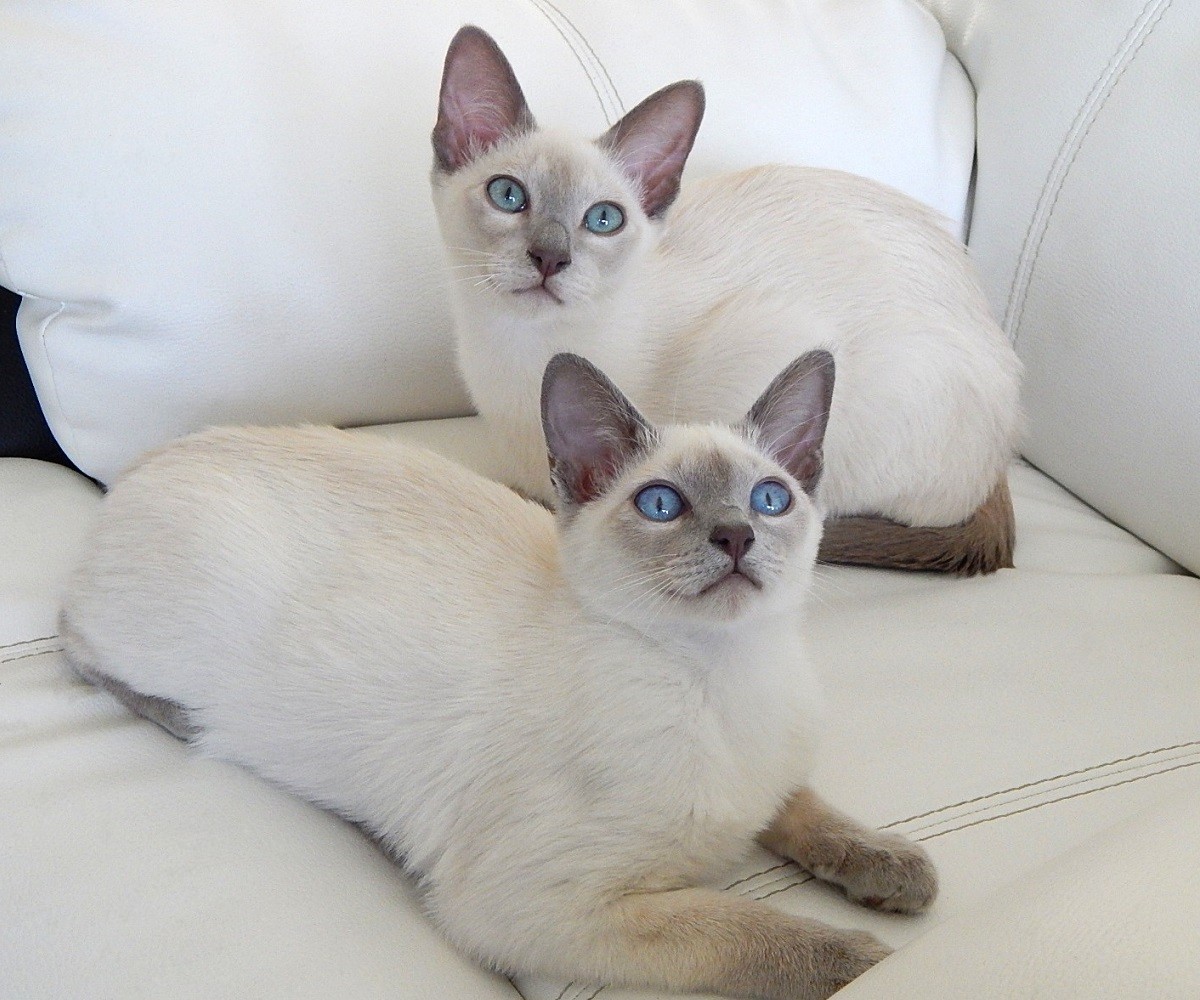
Hybrid Cat Breeds: Thai

Though registered as the Thai with TICA and some select registries in Europe, it's actually known as the Wichienmaat or Old-Style Siamese in Thailand. This adorable cat originates in the Thai kingdom of Ayudhai, and it is still occasionally bred in Thailand today. Elsewhere, however, the Thai is virtually unknown. TICA recognized this cat as a Preliminary New Breed in 2007, and an Advanced New Breed in 2009, but still most people haven't heard of this little guy.

Medium in size and possessing rather short hair, the Thai has a softer appearance than its more popular cousin, the Siamese. The forehead is long and flat, the face sweet and round, and the eyes large and always blue. The hair is short, but very soft, and grooming is easy enough. Only a single brushing a week is required, and this takes only a few minutes.

Though white markings of any kind are not permitted on the Thai, the points may be of any other color. There are Thai cats with tabby, tortoiseshell, or solid point, as long as there is no white present. The body is typically cream, though yellow tones are permitted.

Like many breeds, the Thai is quite intelligent and loves people. And while they may be low maintenance when it comes to grooming, they're truly high maintenance when it comes to affection. This talkative creature will demand any and all attention from anyone in the house. He doesn't really care where he gets his love as long as he gets it. So be prepared to spend a lot of time cuddling.

If you're looking for something a little softer than the Siamese, but still just as charming, you might be looking for the Thai. If you can stand being nuzzled day and night.