.jpg)
In the early 1900s, a cat resembling today's modern Sphynx was shown, but this cat was described as a New Mexican Hairless Cat. It was not recognized worldwide and it did not gain much attention, but it was the first time this type of cat had been exhibited. Though the same mutation appeared several times after this, sometimes in North America, sometimes in Europe, it wasn't until the 1960s that a real effort to create a breed from these cats truly started.
In 1966 a small black and white kitten was born in Ontario, Canada. This kitten had no hair, but did have a very fine down covering her entire body. This little female was named Prune and she would become the foundation cat for the modern Sphynx breed. She was bred to other cats in an attempt to generate more kittens with the hairless gene, but it turned out the gene was recessive. That meant breeding hairless kittens was difficult. Even once a male with the recessive gene was found, only one in four kittens would be hairless. Eventually, however, there were enough kittens to start a true breeding program.
At first these kittens were called Canadian Hairless Cats, but it wasn't long before people started calling them Sphynx. These cats were recognized provisionally by the Cat Fanciers' Association in 1970, but the CFA withdrew its support due to concerns over genetic difficulties (especially its possibly compromised immune system). These concerns were eventually dismissed or corrected and today the Sphynx is recognized by several registries, including TICA.
The Appearance of the Sphynx
Medium in size, the Sphynx is muscular and athletic. The ears are truly huge and the eyes are the shape of ripe lemons. The ears and the eyes combine to give the Sphynx a sweet and open expression. Unless he's annoyed. This cat has the ability to look supremely vexed when he has to. It's almost eerie, the expressions the Sphynx is capable of.
The coat is really the most distinctive characteristic of the Sphynx. Though not truly hairless, this cat is as close as you can get. A fine down covers the entire body, making the skin feel like a soft suede. Acceptable colors and patterns are many and varied. You can have tabby, tortoiseshell, parti-color, and solid Sphynx cats. It's the coat type, not the color, that makes this cat.
Because this cat doesn't have real fur, he doesn't have anything to absorb the natural oils produced by the body. This means he'll get oily, so bathe your cat frequently. Twice a week should do it. If you neglect this simple task, expect to see a greasy spot in any place he's been napping. He also may get cold, so a sweater and a warm bed are a necessity. And sunblock for those sunny days because his delicate skin will burn. Talk to your veterinarian about appropriate brands for your feline friend or just keep him out of the sun.
Though generally thought of as hairless, a Sphynx isn't actually hypoallergenic. This is because most people are allergic to a particular feline protein, and this protein is contained in the saliva as well as the dander. So if you want a cat but you're allergic, before deciding on a Sphynx make sure you've spent some time with one so you know if you're allergic or not.
The Personality of the Sphynx
A Sphynx is almost like a little dog. He's loyal and loving and won't usually leave you alone. He's also fond of snuggling, and not just because he likes to be warm. He just loves to be close and he'll do whatever is necessary to accomplish that goal.
Highly intelligent, the Sphynx is a breed that will get into everything and anything. And while he loves you and your family, he's also just fine on his own. Unfortunately for you, these two traits mean trouble if he's left with nothing to occupy his time. So leave him a few good toys so he doesn't climb into the cupboard and pull out the flour for a good romp. Trust me when I tell you that getting flour off an oily Sphynx isn't a lot of fun. But a good Sphynx is one of the most entertaining of companions.
If you're looking for a unique cat who is loving and equally good with children and other pets, the Sphynx might be for you.

Most breeds that are both ancient and have an exotic look about them have short hair. But sometimes, as breeds are strengthened using controlled outcrosses, an unintended gene creeps in. In the late part of the 19th century and the early part of the 20th, Abyssinian breeders were forced to outcross simply to maintain genetic diversity. At least one of the non-Abyssinian cats used in Abyssinian breeding program had the recessive gene for long hair.
Recessive genes rarely stay that way for long, however, so it should come as no surprise that longhaired Abyssinian kittens were sometimes produced. These undesirable kittens were typically given away, never to be used in breeding programs. But eventually things came full circle, as they often do. It was 1969 when an Abyssinian breeder named Evelyn Mague was working in an animal shelter in New Jersey. One day, when Mague was working, a kitten named George was brought to the shelter. He was not only a longhaired Abyssinian, but one of the kittens Mague herself had bred a few years earlier. Appalled by the way he'd been treated, Mague had him neutered and placed in a loving forever home.
But George's story stuck with her. For a pedigreed cat to be treated as so unwanted just because he'd had the misfortune to be born with long hair was a travesty. Mague decided to not only find and show the longhaired cats, but to have them accepted as longhaired Abyssinians. This didn't go over well with Abyssinian breeders, so Mague pursued the idea that the cats were their own breed, one she labelled the Somali.
Producing more longhaired kittens wasn't difficult. She still had George's parents, after all, so she was able to add approximately one out of every four kittens to her new Somali breeding program. And since the longhaired gene was recessive, breeding Somalis to Somalis produced nothing but longhaired kittens.
It took some time, but Mague managed to find a few other breeders working with longhaired Abyssinians in both the US and Canada. By 1972 there were enough breeders to found the Somali Cat Club of America. It wasn't long before Somalis were registered with National Cat Fanciers' Association (which no longer exists). Other associations, including TICA, soon granted the Somali Championship Status.
The Somali is a man-made breed. It is not the result of a spontaneous mutation, as some Abyssinian breeders claim, and breeders from all over the world were responsible for the introduction of the longhaired gene. Ideally, the Somali should have been recognized as simply a variation of the Abyssinian. It was not to be, however, and so the Somali was born.
The Appearance of the Somali
Because Somalis are really just longhaired Abyssinians, almost everything about them is exactly the same as their parent breed. The head, the body, the conformation...everything is just like the Abyssinian. Somalis should be lean and muscled, giving them an impressive agility. Ears are just a little large and eyes are shaped liked rounded almonds. Just like the Abyssinian.
Even the coat colors are the same as the Abby. Blue, chocolate, cinnamon, fawn, lilac, and ruddy are all acceptable colors. Other colors are sometimes produced, and some registries even accept these colors. Typically, if a color is accepted for the Somali, it is also accepted for the Abyssinian, and vice versa.
The only real difference between the two breeds is the coat length. For a Somali the coat should be long and soft and the tail should have a lovely plume. The neck should have a ruff and the legs should appear fluffy. Somalis look almost like little toys cats, so fluffy and beautiful as they are.
The Personality of the Somali
Somalis are sweet, loyal, and affectionate. Highly intelligent, they will explore every nook and cranny of your home and follow you around looking for new mischief to get themselves into.
This adorable little breed loves children, other pets, and all the people. All the people. He's constantly looking for someone to give him love and attention, so he's a good cat for large, busy households. He'll play games all day, especially if these games involve running and jumping. He's an athletic breed, so make sure he has plenty to keep him happy and occupied.
If you're looking for a sweet cat with the look of the Abyssinian, but you want something with a little more fluff, the Somali just might be for you.

Not all breeds are thrown into the hybrid category because they're hybrids. Sometimes unrecognized breeds remain that way for a while because they're rare and a little different than most accepted breeds. The Sokoke is one if those cats. We don't really know where this breed comes from, but it seems likely that the Sokoke is a naturally occurring breed from Kenya. In 1978 a woman named Jeri Slater found two of these kittens on her coconut plantation in just that area. She kept them and later bred them.
It was her friend Gloria Moeldrup who brought two of these kittens to Europe in 1984. More were imported in 1991 and 1992, and finally FIFe (Fédération Internationale Féline) recognized the breed in 1994. But this was in Europe. It would be some time before the Sokoke was brought to the United States.
When it did finally happen, it was purely due to the interested of Jeannie Knocker and her son. They researched the breed and contacted breeders in Europe, bringing the first Sokoke cats into the United States in 2001. They started their own breeding program with the seven cats they had obtained, but it wasn't until 2004 that TICA accepted the breed for registration. It was a further four years before the Sokoke was advanced to Preliminary New Breed Status. This breed is still struggling for recognition around the world, but it will happen eventually.
Medium in size, the Sokoke is muscular and strong. His head is narrow and his ears are small, giving him an exotic appearance. Thought TICA currently only recognizes the black and brown modified classic tabby coat pattern, the Sokoke actually has many colors. Pointed kittens have been produced and there have even been blue and longhaired kittens in the past few years. Though these are not currently recognized, they're all still Sokoke cats, so don't discount them if you're looking for a pet.
This athletic breed is curious, active, and highly territorial. He loves people and wants to be the center of attention, but he's not great with other cats or even dogs. People. He likes people. Lots of people. He loves a good game and will play fetch, chase, or anything else you can come up with if it means he gets to hang out with you.
If you're looking for an athletic cat who never sits still, the Sokoke might be for you. But keep him entertained or he might tear up your curtains from sheer boredom.
.JPG)
It was the early 1960s when three kittens with snow white feet were born into an otherwise normal litter of Siamese. These kittens were noticed by Dorothy Hinds Daughtery, who found the combination both striking and appealing. She thought perhaps she had the makings of a new breed on her hands, so she kept the kittens an experiment.
Because of the unique features of the kittens, she thought it best to breed them to an American Shorthair. She chose a cat with tuxedo markings for her first cross. This mating would produce the characteristic "V" facial markings the Snowshoe would eventually become known for.
We don't really know a lot about the history or breedings that took place in those early years because records were poorly kept, if they were kept at all, and there was declining interest in this new breed anyway. By 1977, in fact, there was only a single breeder left in the United States. The Snowshoe very nearly died out, and would have if there hadn't been a sudden resurgence of interest in this aloof breed. But there was, and this brought the cat back from the very edge of extinction.
By 1989 there were nearly thirty breeders across the country. It became obvious the Snowshoe was both interesting and unique, so TICA granted this cute cat Championship Status in 1994. Since then it has only grown in popularity.
The Appearance of the Snowshoe
Weighing no more than 12 pounds, the Snowshoe is medium in size and has a powerful body. He is long and muscular with a triangular head and large, expressive ears. Eyes should be round and range in color from a stark blue to a paler blue-gray.
The coat of all Snowshoe kittens is white at first. Snow white, actually. But this changes quickly, leaving only the feet and a "V" on the face white, as the body turns to cream and the points darken to their adult color, beginning at around two or three weeks of age. Common colors include blue point and seal point. Chocolate point and lilac point do exist, but these are not bred for and are considered rare and less desirable.
The hair is short and lays close to the body in a single layer. This makes grooming easy. Run a rubber brush over your feline friend once a week and call it done.
The Personality of the Snowshoe
Because this cat is a combination of the American Shorthair and the Siamese, he has inherited the temperament of both. Tending towards curious and aloof, the Snowshoe bonds to one specific person, not an entire family. With this person he will cuddle, play, and even talk in the melodious voice so common among Siamese blends. He'll demand attention, but he also needs stimulation. Because he is so intelligent and inquisitive, he'll need toys and other items to keep his attention. He will be destructive if he's too bored, so invest in some toys and climbing trees for when you're not around.
As happy and affectionate as this guy can be, he's not great with other people. Or other cats. Or dogs. Or really anything else. He loves his one person and that's about it. The Snowshoe does best in a quiet home with an affectionate human to spend his days with.
If you're looking for a cat with a unique look and a budding personality, the Snowshoe might be for you. If you have a calm home for him to settle in to.

Like the name suggests, the Singapura originates from Singapore. In that area, cats with ticked coats of a deep brown color have been common for centuries. But it wasn't until the 1970s that married couple Hal and Tommy Meadow brought the first of these little sweethearts to the United States. They would eventually start a breeding program to establish the Singapura in the US.
Because they had so few cats to start with, they were naturally concerned with inbreeding. They consulted with a British geneticist on how best to proceed. This slowed down the breeding program a bit, but it made for a stronger, healthier breed all around. When other breeders began working with the Singapura, they all benefited from the care taken in those early days.
Occasionally, despite all the careful breeding, solid brown kittens were born into Singapura litters. By 1985 it was suspected that some Singapuras carried a recessive gene for solid color. This didn't sit well with breeders at all and it was decided a test-mating program was the best way to identify cats with the recessive gene. By 1988 a total of seven cats with the unwanted gene were identified. These cats were adopted out as pets, never again to be used in the Singapura breeding program. This solved the problem of brown kittens, but it also narrowed the gene pool a bit.
Though there were few purebred cats at the time, the Singapura was recognized as a unique and distinct breed by TICA in 1979. But to continue the breeding programs in the United States, more cats were necessary. In 1987 Singapura breeder Gerry Mayes travelled to Singapore, bringing back more cats that could be registered with TICA. The breed is still rare and expensive, but at least the gene pool is relatively wide today.
The Appearance of the Singapura
Weighing in at no more than 8 pounds, the Singapura is the smallest purebred cat in the world. It can take up to two years for this little cat to reach maturity, and when he is grown he is still a tiny thing. His compact body and powerful legs make him an excellent jumper, even among cats. He can and will leap up anywhere.
The rounded head and large ears give the Singapura an alert and even surprised look. The eyes are beautiful and look as if they're decorated with eye liner. Eye color can range from hazel to copper to gold. Some cats even have green eyes.
There is only one allowable coat color for a Singapura. The cat should be ivory with rich sable brown ticking. Some cats have a slightly yellow tone, but this should be mild and is not preferred. Bars of sable should be present on the legs and a noticeable "M" should appear on the forehead.
The coat is always short and easily managed. A quick brush once a week and a buff with a chamois cloth is more than enough to keep your Singapura looking and feeling his best.
The Personality of the Singapura
This breed is a people-loving extrovert at heart. He will follow you around the house and poke his nose into everything you do. He's the cat who will lay on your papers and jump on the keyboard. Are you baking? Watch the cat. He'll leap right into the middle of it all just because he likes to be in on the action.
He also loves heights, so expect to find him on top of fridges and cupboards. The tops of curtain rods are also common spots for this athletic breed. Or he might just sit on your shoulder so he doesn't miss anything. Either way, he gets a bird's eye view.
This little guy gets along well with other cats, even if they're not Singapuras, but he doesn't really like dogs. They tend to be too big and loud for such a tiny cat. He also would prefer older children to younger children for this same reason. Loud people are not his favorite thing, so teach everyone to be quiet and calm around your Singapura kitty.
The Singapura will play with you, but he'd prefer to snuggle and chat. While this breed isn't as vocal as the Siamese, he'll still occasionally chirp and meow and purr to get your attention. Talk to him and he might speak up more.
If you're looking for a tiny cat who always wants to cuddle, the Singapura might be the right cat for you.

We don't really know where the majestic Siberian cat came from, but we do know there are references to these cats as early as 1000 CE (common era). Siberians appeared in the first cat shows in Europe in the 1870s and there is even an oblique reference to Siberian cats at the 1884 Madison Square Garden exhibition. Clearly they're not a new cat.
Siberian cats were mentioned in several books from the era, including the 1889 classic Our Cats by Harrison Weir and the 1898 book Domestic & Fancy Cats by John Jennings. Even the first photo of a Siberian appeared in an early book, specifically Helen Winslow's Concerning Cats. They've been around a while and everyone knows it.
Unfortunately for the breed, records weren't really kept on these beautiful cats in the early days, hampering their recognition by most associations. Finally, in the 1980s, Russian breeders began keeping proper records. They even developed the first breed standards at the Kotofei Cat Club in Moscow around that time, using a blue point and white cat and a brown tabby and white cat as their ideal examples of what the breed should be. This standardization of the breed also meant that other countries could start accepting the cats on an exhibition basis. The United States did this early on.
The All Union Cat Show in 1989 featured 12 Siberians, and a year later three of these beautiful creatures were imported into the United States by Elizabet Terrll. 1997 saw the first colorpoint Siberians brought to the US and in 1998 the first colorpoint kittens were born.
Acceptance was fairly simply once accurate records were being kept. TICA accepted the Siberian as a New Breed in 1992 and by 1996 they had achieved full Championship Status.
The Appearance of the Siberian
Large and powerful, the Siberian is ahead cat with a thick bone structure. The body and head are rounded with gentle contours and soft lines. Even the eyes are rounded, giving the cat a sweet expression. Solid legs and powerful hind quarters make this cat an excellent jumper, so expect to find him on top of the fridge from time to time.
With hair that is a little too long to be called short, and a little too short to be called long, the Siberian has an odd coat length that varies with the seasons. In winter it will be thick and plush with three layers to protect the body from the harsh winters in northern Russia, but in summer this coat sheds out, leaving behind something a little shorter and not half so thick. It's always soft, however, so the Siberian is a pleasure to pet.
The coat comes in a variety of colors and patterns. Colorpoint Siberians, also called Neva-Masquerade, are actually considered a separate breed by the FIF (Fédération Internationale Féline) registry. This is unusual, and has not been done in other registries. For the most point, colorpoint cats are classed with the rest of their Siberian cat friends.
Regardless of color or pattern, Siberians require intense grooming. During the winter, if you forget to brush him one day, he'll be matted by the next, so daily grooming is required. You'll have to keep this up even in the summer for the health and comfort of the cat, but the results are worth the effort.
The Personality of the Siberian
Intelligent and determined, this cat can and will learn now to open cupboards, find those snacks you thought you'd hidden, and can even remove child proof locks if he has enough time. With an impeccable memory and an unwillingness to be dissuaded, expect him to keep at it until he gets what he wants.
He loves people and is highly affectionate. Blessed with a fierce desire to play, he'll engage in a rousing game of fetch or run an obstacle course if that's the current game. Kids love him, and he loves kids, so he's a great family pet. He'll even get along with dogs if they're willing to play a game or two.
The Siberian is a vocal breed with a great range of chirps and meows. He can hold conversations for quite a while if you'll speak to him, and he loves to greet his people at the door with a few high pitched chirps.
If you're looking for a cat who is fun for the whole family and is lovely to behold, the Siberian might be for you. If you can stand the constant grooming, that is.

One day, a woman by the name of Karen Sausman had an idea. She wanted to create a cat that looked like the African serval but had no actual serval blood. This makes the Serengeti unlike the Savannah in any respect. Sausman would active her goals by crossing Bengals with Oriental Shorthairs at Kingsmark Cattery in California.
Her hybrid was a medium sized cat with long legs and a long body. With a large bone structure and upright posture, the Serengeti truly does have the bearing of a jungle cat. Ears and eyes are both just a little larger than you would expect for a domestic cat, and the eyes are either gold or amber in color.
The coat is distinctive, different even than its Bengal ancestors. It should be dusty gold in color, perhaps a dull yellow, with large black spots that are widely spaced. There are some Serengeti cats with solid black coats, but these are rare and not preferred. They're not typically used in breeding programs because they do not conform to the standard breeders are currently trying to achieve.
When it comes to personality and temperament, the Serengeti takes after his Oriental Shorthair ancestors. He is loyal and loves to be around people. He'll play at all hours and will run and jump around the house with the ability of a jungle cat. He's not that fond of fetch, but he does need your companionship. Don't leave him all alone for the weekend or he'll become annoyed. Annoyed Serengeti cats can become destructive.
Like the Oriental Shorthair, the Serengeti is a vocal cat. He'll have entire conversations with humans, and he'll expect you to talk back at him. He's very sweet and ready to snuggle at a moment's notice. Young children may frighten him, but older children will become fast friends.
The Serengeti is a true hybrid and is recognized by very few cat registries around the world. With time, however, he may become more common at cat shows as he gains acceptance. Right now he's just a fun designer cat.

The Selkirk Rex isn't an ancient breed. In fact, it can only trace it's origins to Montana in 1987. Persian breeder Jeri Newman took in a female kitten with an unusual look about her. Quickly named Miss DePesto, the kitten had curly whiskers, a wavy coat, and tightly curled hair in her ears. The other kittens in the litter did not exhibit these traits, leading Newman to believe Miss DePesto might have a new mutant Rex gene.
So Newman bred Miss DePesto to a black Persian male. The resulting litter had six kittens, three of whom had the curly coat of their mother. This meant that the gene was dominant, not recessive like both the Cornish Rex and the Devon Rex. This was the beginning of a whole new breed, and breeders throughout the country were quick to catch on.
TICA accepted the Selkirk Rex into its New Breed program in 1990, then granted it Championship Status in 1994. Since then, most registries have accepted this cat as a unique and recognizable breed.
The Appearance of the Selkirk Rex
With heavy boning and a muscular body, the Selkirk Rex is a medium to large size cat who weighs more than he looks like he should. His round head, round eyes, and tilted ears give him a sweet and open expression.
Like many breeds, the Selkirk Rex has both a longhaired and a shorthaired variety. The shorthaired cats have curls that are both dense and plush. Cats with this coat resemble teddy bears in their way. Longhaired cats...well, they tend to look like they're always having a bad hair day. They have the same fur as their shorthaired brothers, only longer, so they look a lot like tousled little sheep. Think a lamb that you've thrown in the dryer.
Regardless of coat length, the Selkirk Rex can be of any color. Curls will stand out most on the belly, neck, and flanks and are soft and fluffy to the touch. All Selkirk Rex cats need to be groomed regularly. Shorthaired cats can probably thrive with only a once a week brushing, but longhaired cats need to be completely groomed at least twice a week, preferably more, just to keep the coat free of tangles.
The Personality of the Selkirk Rex
This adorable cat loves attention. He is laid back enough to just hang out and he is always up for a cuddle. When someone wants to pet and stroke his unique fur, he typically thrives on the attention. That's good, because with a coat like his, it's often too much for guests to resist a quick pat.
With a love of games and a true desire to please, the Selkirk Rex is good with children as long as introductions are slow and positive. He'll play games with children and even occasionally want to dash around the house with them, but he also needs his space. If he backs off, let him go. He'll rejoin the game when he's ready.
If you're looking for a unique breed who loves people and can't get enough attention, you might want to consider the Selkirk Rex.
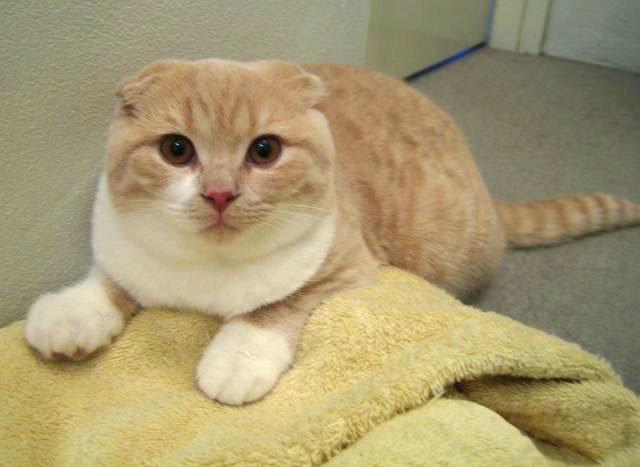
Random mutation has given us many different cat breeds, including the unique Scottish Fold. Back in 1961, William Ross found a white barn cat with long white hair in Scotland. He took her home and named her Susie. Susie was bred to several male cats, including Persians, America Shorthairs, Burmese, and even Exotic Shorthairs. Some of these kittens developed ears that folded down. These cute little guys would become the foundation for the Scottish Fold breed around the world.
Today, Scottish Folds are recognized by most associations around the world. Some registries, such as TICA, allow outcrosses with American Shorthairs or British Shorthairs to keep the gene pool strong, but some registries have banned such practices, meaning not all Scottish Folds can compete in all associations.
The Appearance of the Scottish Fold
This unique breed is medium in size with a soft, round body. Eyes should be round and are typically copper in color, but all eye colors are allowed. The coat is found in all colors and patterns and can either be short or long. Shorthair cats should be groomed once a week, but longhaired cats need a thorough brushing at least two or three times a week to stay happy and healthy.
The ears are, of course, the most distinctive trait of the Scottish Fold. All Scottish Folds are actually born with straight ears, but when the kittens are about three weeks old the ears start to fold forward and down. Usually only half of all kittens will carry the gene that causes folded ears, which means half will have straight ears. These kittens are called straight eared Scottish Folds and, while they are technically Scottish Folds, they are not eligible for competition and they are not usually used in breeding programs.
With the big round eyes and the folded ears that lie flat against the head, the Scottish Fold looks a bit like an owl. A cute, irresistible owl.
The Personality of the Scottish Fold
Intelligent and loyal, the Scottish Fold can learn just about anything, with or without your help. Expect your kitty to pull open cupboard doors and crawl about inside. You might even find him curled up inside a bowl or a pan. You will almost certainly find him sleeping in the sink at some point.
This cat isn't at all shy and loves a good game of fetch. He's good with other pets, including dogs, and loves children. Even younger children are well tolerated by this sociable breed. A friend is a good idea, but it doesn't have to be another Scottish Fold. Another breed of cat, or even a dog, will work just as well.
The Scottish Fold is an amusing cat. He might eat with his feet, sit up like a prairie dog, or even lounge like a human. If you want a funny breed to keep you company, the Scottish Fold just might be the right fit.

Many times, cats that are directly descended from wild cats have a difficult time achieving recognition as a pure and true breed. This has happened, at least in great part, with the Savannah. In April of 1986 a domestic female cat mated with an African Serval, which is a wild cat found in certain parts of Africa. The resulting kitten was larger than a typical domestic cat, buy not quite as large as the African Serval. Though the coat pattern was clearly inherited from the father, the calmness and love of humans was all domestic cat. A true hybrid if there ever was one.
This first generation hybrid kitten was the very first Savannah cat, but he would not be the last. Over the next fifteen years, breeders would work tirelessly to perfect and stabilize their breed. This hard work paid off when TICA recognized the breed in 2001. Today the cat competes in the Advanced New Breed category, but it has yet to gain widespread acceptance, probably because of its rather wild ancestry. This is unlikely to change in the immediate future, but there is hope that one day the Savannah will compete as any other breed within most registries.
The Savannah is a large and sleek cat, very much resembling that African ancestor they so take after. Ears should be tall and alert and standing straight up on the head while the eyes are slightly angled. These two factors make the Savannah appear mildly surprised all the time. Long legs and a long body make him appear taller than he actually is, which is impressive in a cat already as large as the solid Savannah.
The coat is particularly distinctive, more so than even the spotted Bengal. Spots and strips abound and should be easily seen even from a distance. They should be placed in such a manner that they cannot be confused with traditional tabby markings. If it looks like a tabby cat, it is a tabby cat. Savannahs are truly unique and not mistaken for other cats.
Active and very curious, the Savannah loves to play games such as fetch and chase the invisible mouse through the house. He is in desperate need of regular exercise, so make sure you provide plenty of stimulation for your feline buddy. Toys and climbing habitats are an absolute necessity if you want to keep him from shredding your curtains. A friend is even better because they'll be obsessed with each other rather than tearing up the bottom of your couch or bed.
This large breed needs people and hates to be alone, which is another good reason to get more than one cat if you're away from home for hours at a time on a regular basis. He needs human interaction almost to an annoying degree, but don't expect him to be a lap cat. He'll be loyal and affectionate, but he prefers to show his love through playing and pestering than a long cuddle. He's got too much energy to stay in one place for long.
With a short coat that needs little in the way of grooming, the Savannah is a low maintenance breed who can make a pest of himself if he's ignored. If you want a friend with almost doglike loyalty, the Savannah might be for you.
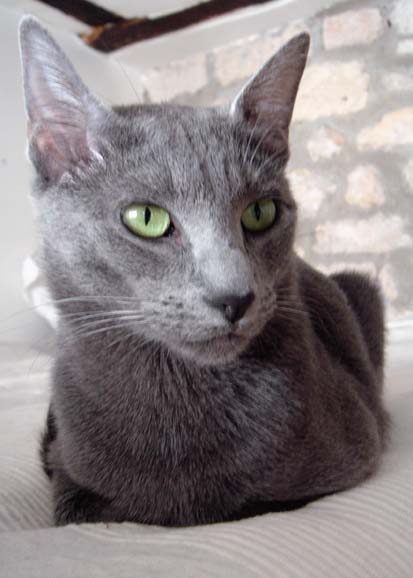
Also known as Archangel cats, the Russian Blue originated near the Russian port of Arkangelsk on the White Sea, a mere 150 miles south of the Arctic Circle. So it made sense to call them Archangel cats simply because of where they came from, though they are an angelic little breed.
Because Arkangelsk was a port city, it was relatively easy for these cats to spread throughout Europe simply by boarding the ships that came through. They made excellent hunters, so were prized by shop captains for catching rats. The Russian Blue spread so quickly that the first cat show in England in 1880 included these stunning creatures.
Prior to 1912, all blue cats with short hair competed in the same class. But by the end of 1912 Russian Blues were granted their own class, but they were described as Foreign Blues, not Russian. There was some controversy over this, but World War I distracted everyone from cats, leaving the matter unsettled for years to come.
After the war, breeding slowly picked up where it had left off, but the war had taken a toll. The gene pool had severely diminished, forcing breeders to resort to outcrosses to revitalize the breed. Some breeders used the British Shorthair for its color, others the blue point Siamese for the more foreign body type. In Scandinavia, breeders decided on blue cats and Siamese cats. Their kittens had short, tight coats and bright emerald eyes.
By the time the Russian Blue was imported into the United States, there were quite a few versions to choose from. Most American breeders used English and Scandinavian cats, breeding for the best features of both. Through their concentrated efforts we were blessed with the modern Russian Blue, a cat with a pale blue coat tipped with silver who has eyes the shade of quality emeralds.
The Appearance of the Russian Blue
Medium in size, the Russian Blue is graceful and elegant. His body had a foreign appearance while being both athletic and muscular. Legs should be long and fine, ears large and set so they frame the face. The eyes are quite distinctive with their emerald green color, and they are noticeable as they are round and just a little large for the face.
The Russian Blue isn't a Russian Blue without the characteristic blue coat. The coat should be short and dense and tipped with silver. This silver gives the cat an impressive shimmer. It looks impressive, and it is, but it's also relatively low maintenance. A quick brushing once a week is all most Russian Blues ever need.
The Personality of the Russian Blue
Incredibly affectionate and quite intelligent, this quick witted breed likes to stalk and observe people before he comes out of hiding. He's not shy or scared, he just likes to set the terms of his affection.
Once he does approach, he will not leave you alone. He might be able to entertain himself while you're away, but when you're home, you're all his. If you have children or other pets, so much the better, because he loves everyone equally. Also, there will be more people to play fetch.
If you're looking for a stunning cat who will love you to eternity, and you're willing to play fetch for hours on end, the Russian Blue might be the cat for you.

The Ragdoll, though not an ancient breed, has been with us since the 1960s. Early in that decade a woman by the name of Ann Baker, a native of California, owned a pure white longhaired cat she called Josephine. She and one of her daughters, along with a seal matted male cat (who happened to be called Daddy Warbucks), are the very foundation of what would become the Ragdoll breed.
Though this gentle breed undoubtedly would not exist without the efforts of Ms. Baker, she was just a little on the eccentric side. She claimed that, during a period when she was in the hospital after a car accident, Josephine's genes were somehow altered. In her mind, this made the kittens born before the accident "normal" while the kittens born after exhibited the traits Ragdoll cats have become famous for. Whatever the truth of the matter, she did manage to select cats that furthered her breeding program.
But she couldn't do it all alone. The gene pool needed strengthening. To do this, she contacted breeders from across the United States, enlisting there help to help develop her breed. Eventually, however, her continued and worsening eccentricities encouraged most breeders to turn away from her. But this was not the end of the breed. Instead, the various breeders continued to develop the Ragdoll independent of Baker's influence.
Eventually, with the help of breeders from all across the country and the world, the Ragdoll became recognized by most major cat registries around the world.
The Appearance of the Ragdoll
Weighing in at up to 20 pounds, the Ragdoll is one of the largest of all domestic breeds. Because of their unusual size, they can take up to four years to reach maturity. In this four years they become large, long, sturdy, and quite hardy.
The eyes of this sweet natured cat must be blue to be admissible in competition, thought the occasional green or yellow does pop up. Round and large, these eyes give the cat a sweet and knowing expression.
This breed has a coat that is soft and silky and about medium in length. In general, there is little shedding associated with the Ragdoll, though they do drop hair in both the spring and fall. Despite their longer hair, they require little more grooming than a weekly brushing to help prevent tangles.
Coat colors are many and varied. A Ragdoll may be blue, chocolate, cinnamon, fawn, lilac, tortoiseshell, or even red and cream. You may also find cats with more tabby colouring, though this is more rare.
There are three acceptable color patterns. Colorpoint Ragdolls are marked like Siamese and have no white on their bodies. Mitted Ragdolls are similar, but they have white feet. The back legs have white all the way up to the hock and there might be a blaze of white on the chest. Finally, bi-color Ragdolls have much more white. You will find the white markings go much higher on the legs and there will be white patches on the back. The belly will be white and the cat will usually have seen white on the face. Most of these patterns are accepted by most cat registries.
The Personality of the Ragdoll
The most distinctive feature of this breed is that most of them for limp when you pick them up for a snuggle. It's a little hilarious and sometimes new owners think their is something wrong with their new friend, but it's completely normal.
Ragdolls tend to be relaxed and friendly, making them great family pets. Most adults will even allow themselves to be dressed up. They like children and other pets and can even tolerate a rambunctious dog if they have to. Kittens are bold and active, and even young adults might display these traits, but mature cats are not really interested in much activity. While they might occasionally chase a toy, they'd really much rather nap in the sun, so don't expect a rowdy companion.
If you're looking for a sweet feline companion who sleeps beside you most of the time, the Ragdoll might be for you.

Originating in the northwestern United States, the Pixiebob has only been with us since the late '80s. In 1985, a woman by the name of Carol Ann Brewer bought a kitten from Washington state. This kitten was a spotted male with a short tail and he was a polydactyl cat. This means he had more than the normal amount of toes. While the typical cat has five toes on the front paws and four on the back, this new kitten had more. It made him unique and adorable, but Brewer thought no more of it than that.
The next year, in 1986, she rescued a classic patterned male cat who had a short tail and stood nearly to her knees. He also was a polydactyl cat. She gave this cat a name. Keba. Later that same year, Keba and a domestic female produced a little of kittens. One of these kittens, a female, had a reddish coat with fawn undertones. She had a muted spotting pattern and had inherited her father's shortened tail. Brewer decides to call this cat Pixie.
Pixie's unique look promoted Brewer to create more cat with these same traits. It took some work, as creating a new breed always does, but by 1989 she was able to document the unique traits of her emerging cat breed, which she called the Pixiebob. It was 1993 before Brewer was able to apply to The International Cat Association (TICA) to begin the recognition process, and 1994 when the Pixiebob was granted Exhibition Status.
Finally, in 1996, the Pixiebob was advanced to New Breed Status. After that, it only took a year for Brewer to prove the true viability of her breed. In 1997, the Pixiebob was granted full Championship Status and has since gained recognition throughout the world.
The Appearance of the Pixiebob
This adorable cat is medium in size, weighing up to 17 pounds, with a muscular body. He weighs more than you might think because he is just that solid. The hind legs are just a little longer than the front, making him appear ready to spring at any moment, and the paws are large with long and thick toes.
While we're talking about toes, it is important to note that the Pixiebob is the only recognized breed that is allowed to be a polydactyl cat. He can have up to seven toes on each foot, though this is more likely to occur on the front feet. For this hefty cat, more toes is just another quirk and not a reason for disqualification.
The face looks almost like the face of a bobcat. The brow should be heavy and the eyes triangular in shape. The only acceptable eye colors are golden brown, gold, or gooseberry green. The tail is often kinked or knotted, but it should still be flexible and manoeuvrerable. Average length varies, but it should never be shorter than two inches and it should always be shorter than the tail of your average cat.
Ideally, the Pixiebob should be a brown spotted tabby ranging in color from tawny brown to a more reddish brown. Though the spots are easily seen, they should be muted and quite small. Heavy ticking is common, and this ticking may be darker in the winter and could even take on a silver tone.
As with breeds such as the Oriental and the Peterbald, the Pixiebob has more than one coat variety. Specifically, there are longhaired and shorthaired Pixiebobs. The shorthaired cats should have a wooly texture and is incredibly thick. This makes it stand up from the body and sometimes feels like the cat is wearing a cushioned coat.
The longhaired Pixiebob, however, has a soft and silky coat that can grow up to 2 inches long. Some cats even have tufts in their ears, making them look like little bobcats. If your Pixiebob has long hair, expect the facial hair to grow downward until it looks like your cat has sideburns. All in all, a very interesting looking cat.
Long hair or short, the Pixiebob is easy enough to groom. A weekly brushing should be enough to keep the coat gleaming and to remove loose hair so your cat doesn't end up with endless hairballs.
The Personality of the Pixiebob
Active and social, the Pixiebob is really more like a dog than a cat. He is loyal and forms and incredible bond with his family. He is great with children and other pets and hates being alone. Highly trainable, the Pixiebob can be taught to walk on a leash and will engage in a rousing game of fetch if the mood allows.
Expect your Pixiebob to talk. A lot. You'll hear chirps, meows, yips, and even a growl once in a while. The growl is not aggressive in any way, but rather yet another one of the varied sounds the Pixiebob is capable of.
If you're looking for a soft cat with boundless energy who will follow you like a little puppy, the Pixiebob might be for you.

If you cross a Donskoy with an Oriental Shorthair, as was done in 1993, you will get what is now know as a Peterbald. A brown tabby Donskoy male was bred to a tortoiseshell Oriental Shorthair female in St. Petersburg. The resulting offspring would eventually become the Peterbald. To keep the breed healthy, cross breeding with Donskoy, Siamese, and Oriental Shorthair cats became common, at least at first.
With the elegance of three Siamese and the Oriental Shorthair and the baldness of the Donskoy, the Peterbald couldn't help but attract cat fanciers from around the world. In 1997 this unique breed was accepted into the new breed program established by TICA (The International Cat Association) and in 2005 it was granted championship status. Today, it competes as any other breed.
The Appearance of the Peterbald
If you took an Oriental Shorthair and shaved him completely, you'd have something that sort of resembles the Peterbald cat. They are long, graceful, and dainty with whip-like tails and slender necks. They are also bald in a cute sort of way. As opposed to the Creepy, I've just been shaved by a psychopath, sort of way.
But they're not all totally bald. They have different types of Peterbalds out there. First are the ultra bald cats. These guys are born with no hair and they never get any hair. Bald cat. Really bald cat. No hair here. No whiskers. No eyebrows. Bald. They feel warm and almost sticky to the touch.
Next is the flock or chamois cat. These Peterbalds appear hairless but aren't. Not really, though they are 90% hairless. They have a smoothness to them and are not at all sticky. Look for a down-like hair on the extremities in this coat type. Flocked cats also have whiskers and eyebrows, those these will be kinked, curled, or broken entirely.
Velour Peterbalds are 70% hairless. They can have hair, but that hair should never be more than a single millimeter in length. The coat may be sparse, leaving the skin clearly visible, or it may be dense, giving the cat a sleek and shiny look. Sometimes velour cats mature to be flocked cats.
Brush Peterbald cats have wavy hair, sometimes even curly hair, that is quite wires in texture. Hair can be 5 mm long, bit keep in mind that kittens with a brush coat may mature to an ultra bald by the age of 2. Or they may not. The denser the coat, the less likely the cat is to shed out as he grows older.
The final coat type is straight, and these are the only Peterbalds that always lack the bald gene. A straight-coated Peterbald will always be a straight-coated Peterbald. Whiskers will be normal and the hair will lie close to the body.
All Peterbalds, regardless of cost type, need special skin care. Regular bathing to remove dirt and grease and a buff with a chamois cloth once a week is usually sufficient.
These cats need sunblock in summer and a sweater in the winter. Other than all that, they're pretty normal cats.
The Personality of the Peterbald
Highly intelligent and quite affectionate, the Peterbald will investigate anything and play until you run mad. They are active and independent, so they are okay left alone for a few hours, but they also love a rousing game of fetch, so be prepared for your feline friend to engage you at a moment's notice.
These inquisitive cats do well with children and other animals as long as they are given an escape route. They probably won't need it, but if they do jump on top of a bookcase to get away from your dog, leave them be until they come down on their own.
If you're looking for a unique cat who will play in the evenings but not destroy the house when you to to work for a few hours, the Peterbald might be for you.

The beautiful Persian has been around for centuries, which is probably why we know so little about its history. We may not know where exactly they came from, but we do know they were present in the very first cat shows in Britain. These Persians has round heads, short faces, and a cobby body. By the later 1800s, however, breeders and cat fanciers started seeking cats with rounder heads, shorter faces, bigger eyes, and cobbier bodies. This led to an even more defined breed standards as the years passed.
By the 1900s, the Persian was being imported into the United States and was increasing in popularity worldwide. At first blue and silver were the colors of choice. Today, all colors are seen and sought after in this luxurious breed.
The Appearance of the Persian
Persians are medium to large in size with a muscular body. Legs should be short and the body should be quite cobby. The head of a Persian should be very round, kind of like a tennis ball, and the eyes should be large and typically copper in color.
Though the Persian has many unique qualities, it's really the coat that makes this breed stand out. The perfect Persian has a coat which flows over the body and reaches the floor. The neck should have a heavy ruff that surrounds the head and the tail should have a plume that's thick and flowing.
There are two coat variations. One is soft and even cotton-like in texture and comes in diluted colors such as blue and cream. This coat mats easily and generally requires daily brushing.
The silky coat is found on cats with more dominant colors such as black and red. This coat still requires maintenance, probably three times a week, but it doesn't mat quite the way the cotton coat does.
Either coat type benefits from routine bathing, so get your kitten used to this from a young age. You'll also have to wipe you cat's eyes with a soft cotton ball to remove anything that might irritate kitty's sensitive eyes.
The Personality of the Persian
Persians are quiet, gentle creatures that prefer quiet, gentle households. While they can tolerate children, they don't like roughness or loud noises. You'll have to teach your children to be quiet and gentle around kitty. This is very important for your cat's peace of mind.
These cats aren't exactly active. They'll play a little, if course, but they're really experts at lounging around in the sun all day. They don't talk a lot, but when they do their voices are sweet and almost musical. All in all, they're lovely little felines.
If you're looking for a companion who will sit quietly while you read, work, or watch TV, and who is good at staying home alone, the Persian might be for you.

Like many other breeds, the modern Oriental cats originated in the decade following World War II (WWII). During the war, the number of available breeding cats in England had been drastically reduced. To create new breeds, and to reestablish old ones, breeders were forced to get creative.
In the case of Oriental cats, Siamese cats were crossed with Russian Blues, Abyssinians, and British Shorthairs. The resulting offspring looked a little like Siamese, but they were not pointed like Siamese. When breeders crossed these cats back to Siamese, within just a couple generations they had kittens that looked exactly like Siamese cats except for the lack of points.
When the occasional pointed kitten was produced, due to the recessive nature of the pointed gene, they were used to strengthen the Siamese gene pool. Non-pointed kittens were used in the Oriental breeding program.
At the beginning, each color produced was given its own name. Chocolate cats were Havanas, whites were Foreign Whites, tabby cats were Oriental Spotted Tabbies, and so on. When it became apparent that there were too many colors, and that those colors didn't always breed true (with some exceptions), they were lumped into two distinct groups. Longhaired cats became the Oriental Longhair and shorthaired cats became the Oriental Shorthair.
The Appearance of the Oriental Cats
Except for coat length, the longhaired and shorthaired versions are completely identical. They are both slender, graceful, and elegant. They're not heavily built, but they are long and tall. The bone structure is fine and delicate, giving the cat a sleek appearance.
Oriental cats should be neither fat nor bony, but rather muscular and firm. The neck should be long and solid and the head should have a very straight profile when viewed from the side. The front view of the head should be triangular.
Ears should be large and wide, eyes are set at an angle and are almond-shaped. Eyes can be of any color, but green is preferred by breeders and gains more points in competitions.
These cats should be brushed once a week. The shorthaired variety could benefit from a buffing with a chamois cloth.
The Personality of the Oriental Cats
Some cats are quiet, reserved, and anti-social. Some are too social for their own good. The Oriental cats are definitely the latter. They are social, intelligent, and active. Because of their highly social nature, they don't really do well on their own. If you're away from home for hours a day, consider getting two cats so they can keep each other company.
Most Oriental cats bond closely to one person in the family and will ignore the rest of the household. They are true lap cats and are likely to fall asleep purring if you stay put long enough.
In addition to loving their people, these cats also chat and interact on a daily basis. They love to play and can turn almost anything into a toy. No piece of paper or paper clip is safe from their budding curiosity. They'll also play with things you'd rather they didn't touch, so put those knickknacks away.
If you're looking for a social cat to keep you company, and you don't mind having a cat play under your feet, then the Oriental Shorthair or Oriental Longhair might be for you.

Some breeds are stuck somewhere between being a hybrid and being a recognized breed. Such is the case with the Ojos Azules. Fist discovered in New Mexico in the 1980s, this odd-looking breed has bright blue eyes which are the product of a genetic mutation.
Most breeds with blue eyes are either white or have point coloration. The Ojos Azules, on the other hand, can be found with any coat color and pattern. So you can have a tabby with blue eyes, a grey cat with blue eyes, or even a rare and striking black cat with blue eyes. The possibilities are practically endless.
Both the shorthaired and the longhaired version of this cute little cat were only accepted by The International Cat Association (TICA) in 1991. Breeding was temporarily suspended when it was thought that the gene that gave the cat its blue eyes might cause skull defects, but it soon became apparent that the gene is harmless. Still, there are few breeders working with them today. Many of the breeders who where working with them prior to the suspension didn't pick it up again after breeding resumed.
The breed standard for the Ojos Azules is still being developed, so what they will be is hard to say. The blue eyes are important, and the cat should be medium in size with a head that is moderately triangular. White is unlikely to be an acceptable color in competition, but all other colors are allowed. The face should be sweet and pretty. Other traits are still being decided upon.
This cat is not easy to find right now. But if you want a cat with bright blue eyes and a sweet disposition, the Ojos Azules might be the cat for you.
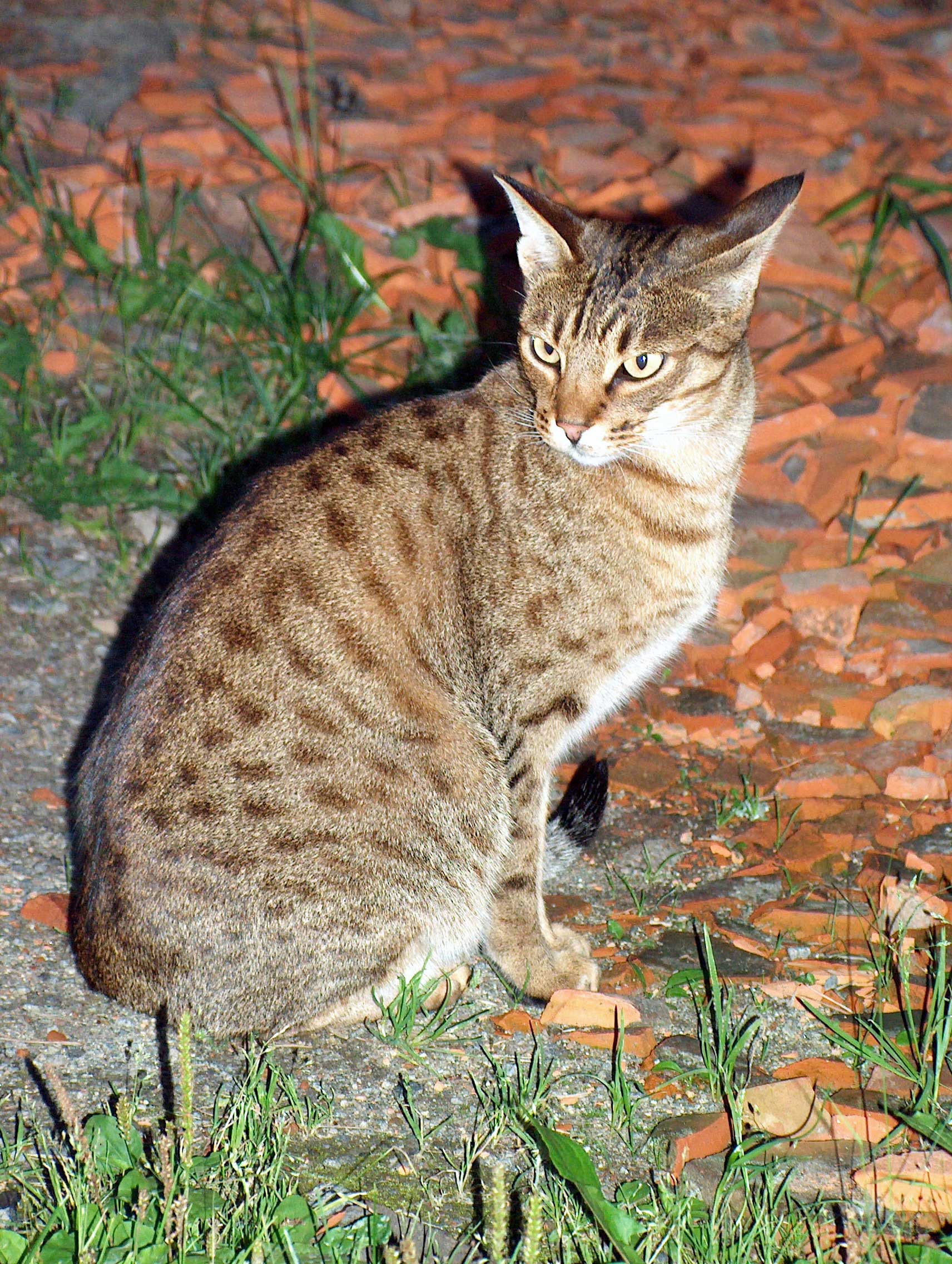
The Ocicat was created entirely by accident in 1964 when Virginia Daly was trying to develop a Siamese with points the same color as the Abyssinian. Her efforts didn't seem to be going anywhere when she bread a seal point Siamese to a ready Abyssinian and the kittens all looked surprisingly Abyssinian. Not discouraged, she kept a small female from this litter and later bread this cat to a chocolate point Siamese.
The results were rather surprising. This breeding had produced some Siamese kittens with Abyssinian. Determined to reproduce your success, she repeated the same breeding and was rewarded with a beautiful ivory continue with gold on spots. She names this kitten Tonga. Because Tonge looks like an ocelot, he was called Ocicat. The name stuck and was eventually used to describe this new breed. But because a new breed was not Virginia's goal, Tonga was neutered and adopted into a new home.
This might have been the end of the story if Virginia hadn't mentioned Tonga in the letter to geneticist Dr. Clyde Keeler. Keeler, with his interest in feline genetics, expressed an interest in producing a cat that resembled the extinct Egyptian Spotted Fishing Cat. He would have liked to have bread Tonga back to his mother, but since this was not possible Virginia repeated the initial breeding and was rewarded with the Tony spotted male. This kitten was left intact so he could be used in a new breeding program. American Shorthairs were used to provide genetic diversity.
Things might have gone well from this point on if life hadn't intervened. Virginia was forced to suspend her breeding program so personal reasons until the early 1980s. At this point, other breeders became interested in these spotted cats and new lines were developed with surprising speed. The International Cat Association (TICA) granted the Ocicat championship status in August of 1986.
The Appearance of the Ocicat
The Ocicat is one of the larger cat breeds and has a sleek body with a slightly foreign appearance. Weighing up to 14 pounds, these cats are well muscled and strong. The eyes should be almond shaped and fairly large, giving the face and exotic appearance. With its quick movements and lean body, this cat is athletic and graceful.
The coat of the Ocicat should be short and how to be traditional spotted and striped pattern. Though there is only one pattern, there are a variety of colours. These include blue, brown, chocolate, cinnamon, fawn, and lilac. Black spots are most common, but silver varieties also exist. Either way, the Ocicat looks like a small jungle cat.
Spots should be thumb-shaped and arranged over the body so they resemble a bull's eye. Individual hairs have several bands of ticking, contributing to the beauty of the overall pattern. Sometimes kittens are born in the classic tabby pattern, but these kittens are not eligible for competition and are not typically bred.
The short coat is fairly low maintenance. You can remove loose hair with a soft rubber brush every week or two. If you want to encourage a natural luster, consider buffing your cat with a chamois cloth.
The Personality of the Ocicat
An inherently playful cat, the Ocicat is active, curious, and exciting. They love to play and will happily engage in many games. This breed is certainly smart enough to learn quickly and will follow you around waiting for the next game. They love children and other pets, so they fit well into most households.
There are few breeds that bond to their families the way the Ocicat does. Because of thus, you really shouldn't leave an Ocicat alone for long periods of time. If your cat does need to be left alone, consider getting a second Ocicat. They will keep each other company.
If you're looking for a cat that looks and acts like an affectionate jaguar, the Ocicat may be for you. Just make sure he gets plenty of exercise and has a playmate and a few toys and he'll be the happiest little cat on the block.
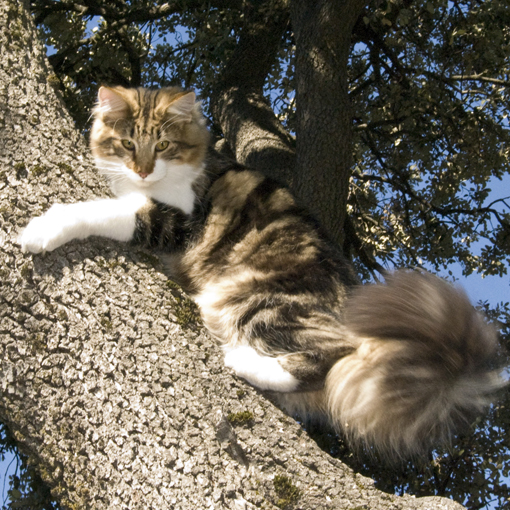
Also known as the Skogkatt or Norsk, the Norwegian Forest Cat is a breed straight out of Viking legend. It is, in fact, mentioned in many Viking myths and is said to have traveled with the Vikings on their ships. Because of the mythology surrounding the Norwegian Forest Cat, we'll probably never know how old this breed really is. We do know they've been around a while and they have adapted to their climate and surroundings quite well. But we don't know how old the breed is.
In the early part of the 20th century, the Norwegian Forest Cat's numbers had declined enough that they were actually in danger of extinction. Several breeding programs were started to try and save the breed, but World War II (WWII) got in the way, causing almost all of the programs to be put on hold.
It wasn't until the 1970s that things got back on track again, particularly in Norway. This elegant breed was declared the official cat of Norway and breeding programs were established to focus just on revitalizing the breed and saving it from extinction. The first breeding pair was imported into the United States in 1979, but the breed wasn't given Championship status with The International Cat Association (TICA) until 1984. Since then, it has slowly gained in popularity. It is still not the most common cat, but at least it no longer faces extinction.
The Appearance of the Norwegian Forest Cat
Though not necessarily as large as the Maine Coon Cat, the Norwegian Forest Cat is still on the large end of domestic cats. He's muscular and strong, but he's also agile and relatively light for his size.
The ears are very large, but they're also quite wide, so wide they resemble an equilateral triangle. Eyes are also large, and are almond shaped, giving him a sweet and expressive face. Eyes often vary in color, but they should be clear and gleaming.
The coat of the Norwegian Forest Cat can come in any color and pattern. It's really the fullness and texture that are important for this breed. Though the outer coat is soft and fluffy, the undercoat should be dense enough to keep the cat warm in the depths of the Scandinavian winters. The coat should also be water resistant. In winter the coat should be long and flowing. In summer it should be shorter, but still water resistant. The tail should be long and flowing, just like the coat.
Though this breed definitely has long hair, the coat isn't as high maintenance as other longhaired cat breeds. You don't really have to groom these guys every day for their coats to maintain their beauty. Instead, a brushing once or twice a week to remove dead hair is generally enough.
The Personality of the Norwegian Forest Cat
A highly intelligent feline, the Norwegian Forest Cat is quite resourceful and is probably one of the most adaptable cats around. They are perfectly happy hunting mice in a country field, but they're just as suited to lazing about on the couch all day while you read a book. Even a cat who is confined to an apartment will find a variety of ways to entertain himself.
This cat really loves toys and games, especially if they involve hanging out with people. He'll run through cat tunnels, chase catnip-filled toy mice, and leap after feathers on sticks. In short, this breed is constant entertainment. He's also great with kids and other pets and will even play with older children if his mood right.
If you're looking for a mild-mannered cat who can cuddle up like a small dog, the Norwegian Forest Cat might be for you. Be prepared for his pranks, though, because this perky cat is always looking for a little bit of nonsense.
There are many ancient breeds of cats. The Nebelung is not one of them. It was, in fact, not even conceived of before the 1980s. The name 'Nebelung' is derived from the German word 'nebel' (meaning fog). It is also based on the medieval German saga Nibelungenlied, which is said to represent the cat's distinctive blue coat that is as silky and wispy as fog.
Initially developed by Cora Cobb, the first two registered Nebelungs were born in 1984 (Siegfried, a male) and 1985 (Brunhilde, a female). Siegfried's parents were unremarkable, as were Brunhilde's. Still, the two became the foundation of what would become the Nebelung cat breed and had their first litter in 1986. In 1987 Cobb applied to The International Cat Association (TICA) for New Breed status.
Because the coat color is so important for this breed, the Russian Blue was officially designated as an allowed outcross. This encourages the development of the gene pool without compromising the stunning color of the breed. After a decade of breeding, the Nebelung was granted Championship status in 1997.
The Appearance of the Nebelung
The Nebelung is on the larger end of the medium-sized cats. He should be a muscular cat with a long tail and ears that are large but still in proportion to the head. The eyes should be wide set and open. They should be green in color, though a yellowish-green is also acceptable. Gold is too yellow a color the a Nebelung's eyes.
The coat is really what sets these cats apart. Like the Russian Blue, the coat is a silvery blue color. Unlike the Russian Blue, the Nebelung has long hair instead of the shorter hairs so characteristic of the Russian Blue. The hair is silky but quite dense, requiring a good grooming at least twice a week to remove any lose hair and prevent matting. These cats don't like matts at all, so do groom your feline companion well.
The Personality of the Nebelung
This cat breed is on the more sensitive end of the scale when it comes to temperament, so take care when introducing him to new people, children, and other pets. A kitten will need ample time to adjust to a new environment, an adult cat even more so, so be patient with him.
Once your new friends does adjust, however, you will have a loyal and loving companion. They are very people-oriented and need to be around people familiar to them to feel comfortable. This is not a cat you should lock in the back room while you make dinner. He would prefer to sit at your feet instead.
If you want a quiet cat who will shower you with kisses and cuddles, the Nebelung might be for you. They are affectionate cats to those they love, but you will have to be patient with his sensitive breed.
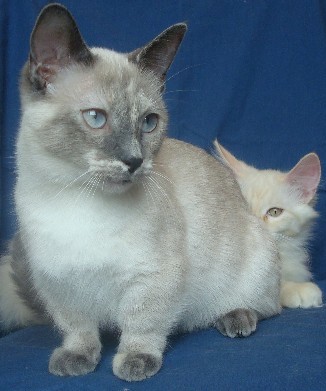
The Munchkin is a relatively new breed, having its roots in the early 1980s, but the mutation that resulted in the shorter legs actually appeared sporadically throughout the 20th century. The first reported mutation occurred in Britain in 1944. Dr. HE Williams-Jones wrote an entire paper on four generations of short-legged cats. This line, which may very well have gone on to found an entire breed, was tragically lost during WWII (World War II).
Fortunately for the cat fancy world, the short-legged trait appeared again. Several times, in fact. It could be found in Stalingrad in the 1950s, New England in the 1970s, and Louisiana in the 1980s. It was in 1983 that Sandra Hockenedel found a pregnant cat who happened to have the shortened legs the Munchkin would become famous for. This cat, who she named Blackberry, would become the foundation for the modern Munchkin breed, though several outcrosses would be necessary to establish a diverse gene pool.
After a decade of careful outcrossing, the Munchkin was recognized by TICA (The International Cat Association) in 1994, but only in the New Breed development program. This program ensures that the breed is stable and healthy before championship status is granted. It was during this time that the gene which results in the shorter legs is actually dominant, much like the gene in the Corgi and Dachshund dog breeds. This helped with the breed's stability and in 2003 TICA granted the Munchkin cat breed championship status.
The Appearance of the Munchkin
The Munchkin cat looks very much like most other cat breeds, including the American Shorthair, except for the length of the legs. The mutation that makes these cats so unique shortens the leg bones, but does not affect any other part of the cat. So unlike the Corgi or Dachshund, the Munchkin doesn't have the back problems you might expect to see in a breed with such tiny legs. In fact, this breed has few health problems at all.
A medium-sized cat, the Munchkin typically weighs in between 5 and 9 pounds. Because of the early outcrossings, they can be of any color or pattern, so there is great variety in the Munchkin breed. They come in both longhaired and shorthaired varieties, the only difference between the two being the length of the coat. Shorthaired cats have an all-weather coat that is silky to the touch and requires only light grooming. Longhaired cats have an all-weather coat that is silky to the touch and requires more intensive grooming. Other than this slight difference, they are the same cat.
The Personality of the Munchkin
You might think this cat looks like a lot of fun, and you'd be right. They love to run and jump (though they can't jump as high as cats with longer legs) and will happily dash after whatever toy has been tossed for them. The Munchkin has a lot of energy and rarely slows down unless dinner is on the table.
The Munchkin has a sunny disposition and gets along with everyone from small children to strange dogs. They like everyone and want everyone's attention. A highly curious cat, this breed can sometimes get themselves into trouble with all their exploring, but you'll never want for excitement with this little bundle of energy around.
If you're looking for a cat that is unique and has a great personality, the Munchkin might be for you. They are happy and fun companions for the young and old alike. As long as you don't might a short little cat dashing around your living room at all hours.